


A neck injury can stop you in your tracks. Whether it’s the result of a sudden fall, a heavy lift gone wrong, or years of repetitive strain, damage to the neck can affect balance, coordination, and even fine motor skills in your hands. These cervical spine injuries don’t just make your job harder. They can disrupt nearly every part of your daily life.
In Washington State, you have the right to fair compensation for lost wages, medical treatment, and other benefits, but the final neck injury settlement amount depends on how your condition is classified, your medical evidence, and how you respond when the insurance company tries to minimize your workers’ compensation claim. Knowing the process and the factors that drive fair settlement values is key to protecting your future.
What Neck Injuries and Procedures Qualify for Workers’ Compensation?
If your neck injury happened at work or a work-related activity worsened an existing condition, you may have a valid workers’ comp neck injury claim. Your injury can occur suddenly from a fall, impact, or lifting accident, or develop gradually from repetitive strain, awkward posture, or years of heavy labor.
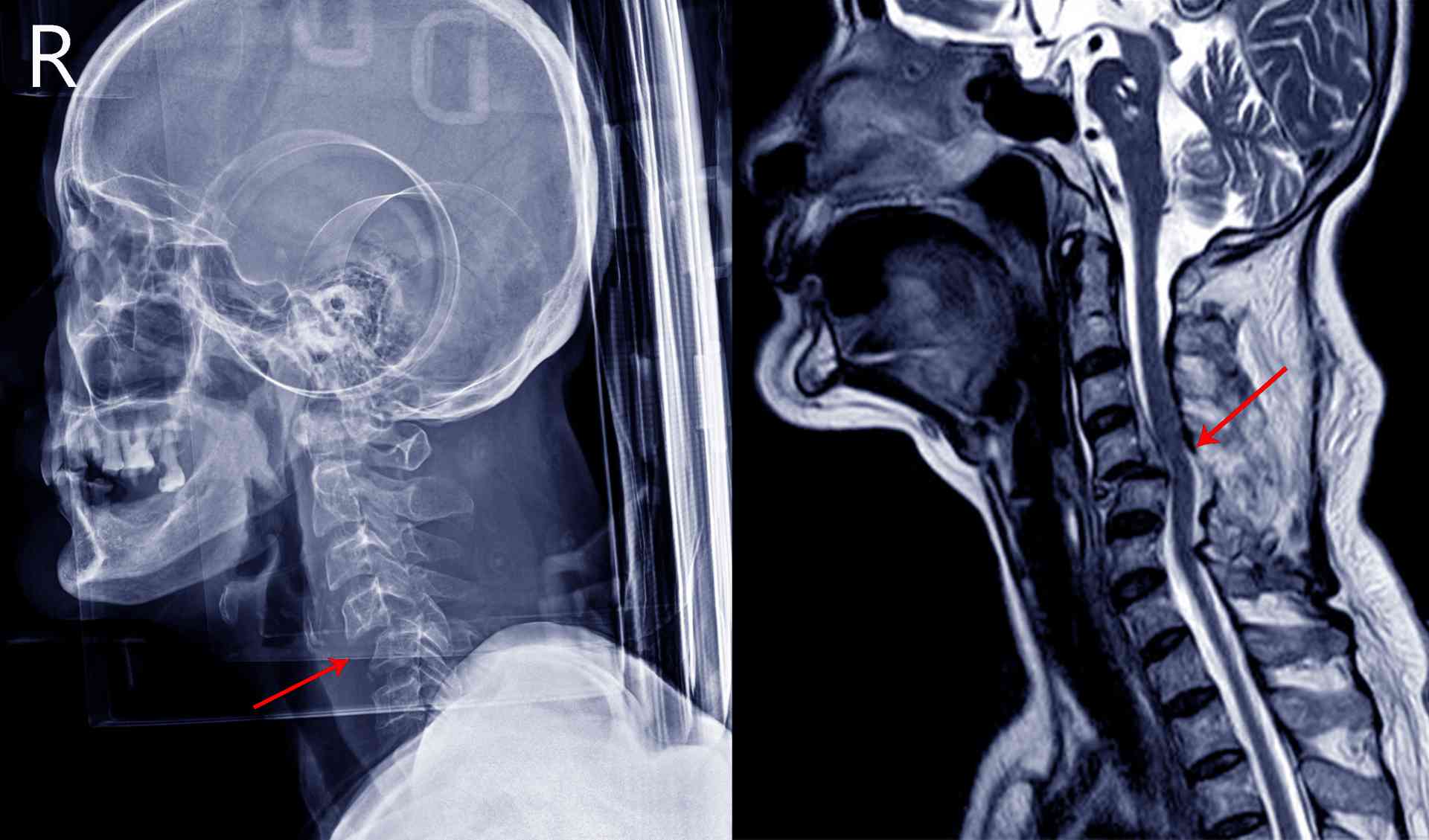
They often happen alongside shoulder, upper back, arm, or elbow injuries, and when multiple body parts are involved, your claim may include more than just the neck. A clear connection between your workplace injury and medical imaging (MRI, CT, or X-ray), along with a specialist evaluation, greatly improves the chances of claim acceptance and proper medical care.
Some severe injuries are more likely to lead to cervical fusion surgery because they involve structural instability, spinal cord damage, or severe nerve compression. Others can be managed with physical therapy or medication, but may still result in high neck injury settlement amounts if they leave lasting restrictions. Here are the most common cervical spine injuries we see in Washington workers’ compensation cases, including both sudden trauma and conditions that develop over time:
| Injuries Likely to Require Surgery | Injuries Typically Treated Non-Surgically |
|---|---|
| Bulging or herniated discs with severe nerve compression | Mild to moderate muscle strains (cervical sprain or strain) |
| Cervical spinal stenosis causing spinal cord compression (myelopathy) | Whiplash injuries without structural damage |
| Fractures or dislocations of the cervical vertebrae | Minor disc bulges without nerve involvement |
| Severe spondylolisthesis (vertebra slippage) | Ligament sprains without instability |
| Multi-level degenerative disc disease with instability | Facet joint irritation without significant mobility loss |
| Tumors or masses compressing the spinal cord | Repetitive strain injuries from posture or overuse |
| Cauda equina-type symptoms in the cervical spine (rare but severe) | Minor nerve irritation without measurable weakness |
| Instability requiring fusion after trauma | Mild degenerative changes seen on imaging |
| Severe radiculopathy unresponsive to conservative medical care | Cervicogenic headaches without spinal instability |
| Hardware failure from prior neck surgery | Chronic muscle tension or spasms |
| Large bone spurs (osteophytes) compressing the cord or nerves | Mild arthritis without significant movement restriction |
| Post-traumatic instability after fracture healing | Early-stage degenerative disc disease |
What Is the Average L&I Settlement Amount for Neck Injuries?
Nationally, workers’ compensation claims for neck and back injuries average about $68,000 in combined medical costs and wage-loss benefits, according to the National Safety Council. That figure reflects overall claim costs, not a final “settlement check.” In Washington, there’s no published average workers’ comp neck injury settlement because your payout depends entirely on how your exact injury is rated, not national trends.
In Washington State, L&I assigns a Total Bodily Impairment (TBI) value each year through its PPD award schedule. For injuries between July 1, 2025, and June 30, 2026, the TBI value is $264,332.13. Your award is calculated as a percentage of that figure, based on your impairment category and the specific spinal region injured. For cervical spine injury claims, the cervical and cervicodorsal regions are rated using this schedule:
| PPD Awards Schedule: Cervical & Cervicodorsal Spine (7/1/25 – 6/30/26) | ||
| Category | % of TBI | Payout |
| Category 2 | 10% | $26,433.21 |
| Category 3 | 20% | $52,866.42 |
| Category 4 | 25% | $66,083.04 |
| Category 5 | 35% | $92,516.25 |
The information in these charts and the dollar figures listed are provided to help readers evaluate their claims. There is no guarantee that your claim will produce the same results. Past outcomes do not ensure future success. Each case is unique and will be evaluated independently. Your outcome will depend on various factors, including the facts, the law, timeliness, advocacy, and unforeseen circumstances.
The information on this website is provided to help interested persons understand the role that legal services play in the claim process. This data is intended solely for informational purposes and does not constitute legal advice. It is not a replacement for consultation with a qualified attorney about your specific legal situation. Click here for a free consultation with an attorney.
A 20% impairment rating in the cervical region (Category 3) means a PPD award of $52,866.42. This is in addition to previously received benefits such as medical expenses, wage-loss, or vocational benefits. Even a single category increase can mean tens of thousands more in benefits, which is why accurate ratings, extensive medical treatment documentation, and legal representation are critical.
Common Complications From Neck Injuries That Increase Settlements
Neck injuries can trigger a chain reaction of medical problems that affect far more than just the cervical spine. Some of these complications develop immediately after the injury, while others emerge months or even years later.
When these injuries are documented in your workers’ compensation claim, they can substantially increase the value of your neck injury settlement because they often lead to higher impairment ratings, permanent disability, and long-term work restrictions that may require future medical treatment or even long-term disability benefits.
| Complication | Description |
|---|---|
| Nerve damage (radiculopathy) | Pinched or damaged nerves in the cervical spine can cause weakness, numbness, or tingling in the shoulders, arms, and hands, leading to medical expenses for ongoing care. |
| Spinal cord injury or myelopathy | Compression or trauma to the cord itself can cause spinal cord damage that affects coordination, balance, and even bladder or bowel control, potentially raising neck and back injury settlement values. |
| Chronic headaches (cervicogenic) | Persistent headaches caused by nerve or muscle damage in the neck may require extensive medical treatment and add to overall settlement values. |
| Loss of neck mobility | It can occur after anterior cervical surgeries due to nerve or esophagus irritation, leading to additional medical costs and a higher personal injury claim value. |
| Multi-level spinal damage | Injuries affecting more than one cervical segment often carry higher ratings in a neck and back injury settlement, particularly when combined with severe injuries in other regions. |
| Post-laminectomy syndrome | Ongoing pain and mobility loss after surgery can require future medical expenses and lead to a higher average workers’ comp neck injury settlement. |
| Adjacent segment disease | Accelerated degeneration in vertebrae above or below a fused segment can lead to additional medical bills and possible permanent impairment ratings. |
| Hardware complications | Loosening, breakage, or rejection of plates, screws, or rods used in surgical repairs often requires further medical treatment and increases settlement values. |
| Vestibular or balance problems | Sometimes linked to upper cervical spine injuries or nerve involvement, these can cause long-term disability and justify higher accident settlement amounts. |
| Complex Regional Pain Syndrome (CRPS) | A severe chronic pain condition that can develop after trauma or surgery, often resulting in permanent neck injury symptoms and the need for legal representation to secure fair compensation. |
| Voice or swallowing difficulties | Can occur after anterior cervical surgeries due to nerve or esophagus irritation, leading to additional medical costs and a higher personal injury claim value. |
How Surgery Affects Settlement Value
Surgery often increases average workers’ compensation settlement values because it can permanently limit mobility, require hardware implantation, or involve multiple spinal levels, all of which are measurable under Washington’s PPD schedule. However, even non-surgical injuries can carry significant value. The more severe the exact injury and the more extensive the residual impairment, the higher the award.
Why Neck Injury Claims Get Denied or Undervalued

Valid neck injury claims can be denied or drastically undervalued if certain issues arise during the workers’ comp process. Some of the most common reasons include:
- Causation disputes: The insurance company claims your condition is the result of pre-existing degeneration, arthritis, an off-the-job cause, or an old injury rather than your workplace injury.
- Lack of objective findings: Claims without clear imaging results (MRI, CT scan, or X-ray) or measurable loss on a physical exam are often challenged, reducing potential settlement values.
- Underreporting by Independent Medical Examiners (IMEs): IME doctors hired by the insurer may downplay your range-of-motion loss, nerve symptoms, functional restrictions, and PPD rating.
- Delayed injury reporting: Waiting days or weeks to notify your employer can make it easier for insurers to claim the injury happened elsewhere.
- Failure to connect secondary conditions: Issues like neck and back injuries, chronic headaches, or arm weakness stemming from the neck injury may be left out of the official claim and therefore go uncompensated. It’s essential to make them an accepted condition.
- Incomplete or inconsistent medical records: Gaps in treatment, missing specialist notes, or conflicting doctor statements can weaken your injury claim.
- Disputes over work-relatedness in gradual injuries: Conditions that develop over time, like repetitive strain injuries, are often more challenging to prove without a detailed job history and ergonomic assessment.
- Minimization of symptoms by treating providers: Early medical notes saying you are “improving” or “returning to normal activity” may be used by insurers to justify a lower rating.
Will Workers’ Comp Always Pay Settlement Money for a Neck Injury?
Whether you get a closing order with a monetary award for a neck injury depends on how L&I classifies your case when you reach maximum medical improvement (MMI).
A settlement, typically in the form of a Permanent Partial Disability (PPD) award, is only offered if there’s measurable, lasting impairment. This could mean reduced range of motion, nerve damage, or ongoing weakness that can be documented by a medical exam. L&I is more likely to offer a settlement when:
- You have documented loss of neck movement, strength, or coordination verified by a specialist and your attending physician.
- Imaging (MRI, CT scan) confirms a structural injury such as herniated discs, fracture, or instability.
- Your injury causes permanent work restrictions that prevent you from returning to your original job.
- There’s a clear, well-documented link between your injury and your job duties or accident.
- You’ve completed treatment, reached MMI, and your condition is stable.
- A medical provider has assigned an impairment rating based on Washington’s PPD schedule.
Other possible outcomes if you don’t meet these criteria include:
- Medical-only closure: The claim closes after treatment with no cash award if you’ve fully recovered.
- Denial of further benefits: If L&I determines there’s no objective medical evidence of impairment or your condition isn’t related to work, you may receive nothing after treatment ends.
A settlement isn’t automatic. It’s a reflection of how much permanent impairment can be proven. The more detailed and objective your medical evidence, the stronger your case for an award.
When to Contact an L&I Lawyer for a Neck Injury
Not every neck injury claim needs a lawyer, but there are situations where having a lawyer can make a significant difference in the outcome. You should consider speaking with an experienced lawyer or personal injury attorney if:
- Your claim is denied or questioned due to a lack of objective medical evidence.
- You’ve been assigned a low impairment rating that doesn’t match your limitations.
- Your injury affects multiple areas (neck, shoulders, arms), and L&I isn’t rating them all.
- Your condition worsens after claim closure, and you need to reopen the case.
- You’re facing pressure to return to work before you’re medically ready.
- Your employer refuses to offer light-duty or modified work despite restrictions.
- You’ve been denied certain treatments, such as injections, additional imaging, or specialist referrals.
- Your injury aggravates a pre-existing condition, and L&I disputes the connection.
- You’re over 50 and want to explore a structured accident settlement option.
- You’re concerned about how vocational rehabilitation will affect your benefits or job prospects.
- You’ve experienced delays in claim processing or payments without a clear explanation.
- You’re dealing with cross-regional or multi-jurisdictional claims (e.g., injured in Washington but live elsewhere).
- You have a self-insured employer using aggressive claims management tactics.
It never hurts to consult with a personal injury claim specialist or workers’ compensation attorney. Most will review your case for free, explain your options, and only charge a fee if they help you secure additional benefits.
Get the Right Help for Your Neck Injury Claim
A serious neck injury can change the way you work, move, and live. These cases aren’t just about short-term recovery. They can shape your long-term earning capacity, quality of life, and financial stability. The difference between a fair compensation package and a low offer often comes down to how well your injury is documented, how accurately it’s rated, and whether you have legal representation pushing back when L&I undervalues your case.
Our Law Firm represents injured workers across Washington. We challenge bad ratings, fight for necessary treatment, secure second opinions, and reopen claims when symptoms return. If you’ve suffered injuries from a workplace injury that caused neck or back injuries, let us review your claim. There’s no charge for a free legal consultation, and no fee unless we help you win more benefits.