
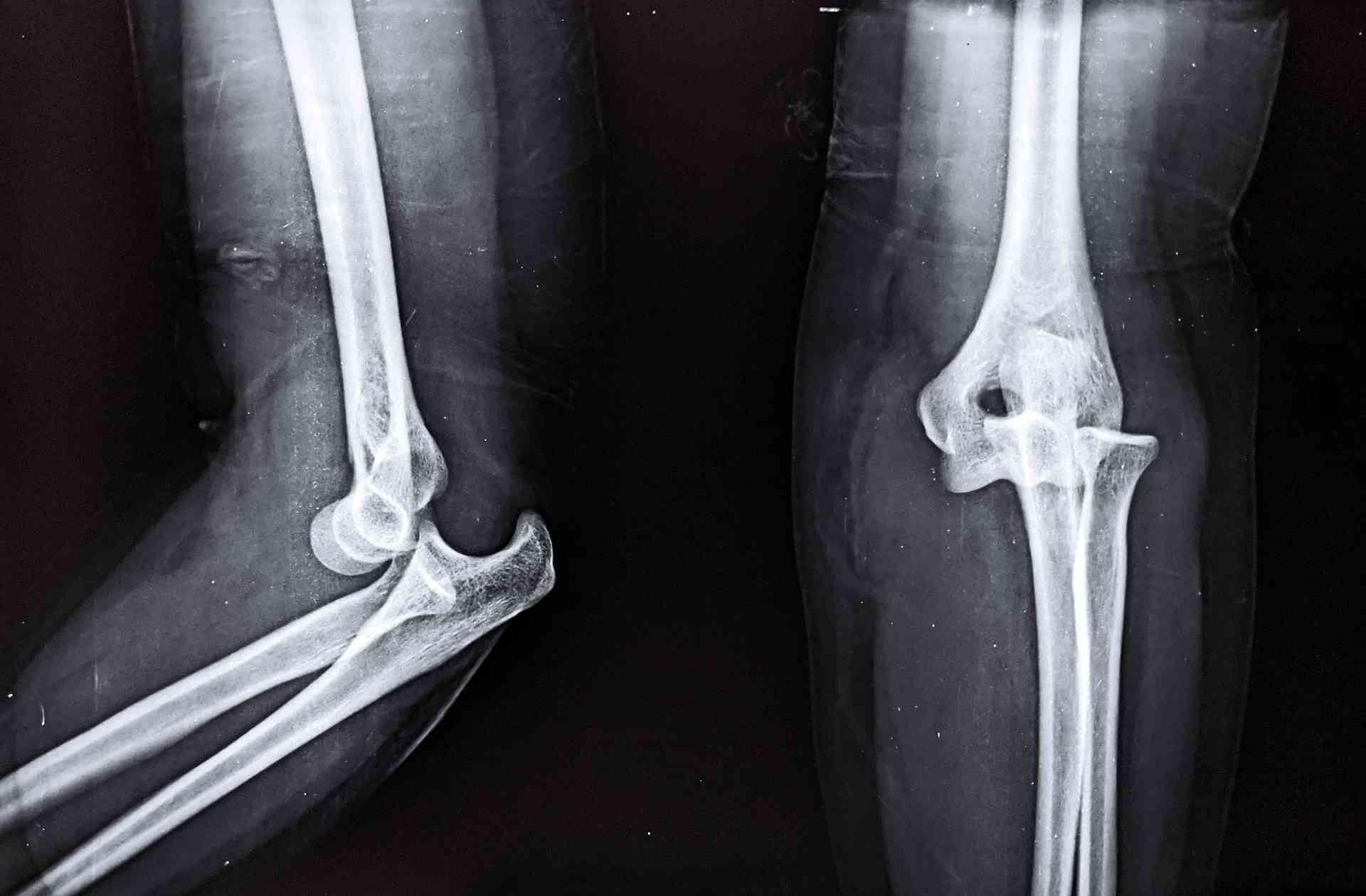

Elbow injuries are serious, and if yours requires surgery, your body won’t be the same. Loss of strength, range of motion, and possibly your job are a stiff price to pay for an L&I injury. The law says you’re entitled to compensation, but what you get depends on how well you handle your L&I claim. If your surgery has left you with lasting limitations, your claim has value, and you will benefit if you understand the settlement process. Do what you need to do now and avoid getting shortchanged.
What Elbow Injuries Qualify for Workers’ Compensation?
If your injury happened at work and required surgery, or if work causes pre-existing injuries to worsen over time, you likely have a Labor and Industries (L&I) claim. These injuries often happen due to:
- Lifting
- Pushing
- Falling
- Repetitive motion
- Overexertion
- Trauma from the equipment
- Slip and fall accidents
- Sudden impact while working with machinery
- The negligence of others.
We also regularly see elbow injuries occur alongside rotator cuff tears, soft tissue injuries, or a broken arm. If multiple areas are injured in the same incident, your claim should cover more than just the elbow.
An L&I claim is more likely to be accepted if the injury is unquestionably linked to your job and supported by imaging (X-ray, MRI) or a specialist’s evaluation. That doesn’t stop employers or claims managers from disputing it, but a valid medical diagnosis and clear work connection put you on solid ground.
Here are the most common elbow injuries we see in workers’ compensation cases, including both sudden injuries and slow-developing conditions:
| Injury | Description |
|---|---|
| Fractures (radial head, olecranon, distal humerus) | Breaks in one or more of the bones that form the elbow joint, often caused by falls or direct impact. |
| Dislocations | When the bones of the elbow joint are forced out of alignment, it is usually due to trauma or twisting during lifting or falls. |
| Biceps or triceps tendon tears | Partial or complete tearing of the tendons that attach the upper arm muscles to the elbow, often requiring surgery. |
| Torn ligaments (ulnar or lateral collateral) | Damage to the connective tissue that stabilizes the elbow, often caused by forceful twisting or overuse. |
| Ulnar nerve damage (cubital tunnel syndrome) | Compression of the ulnar nerve at the elbow can lead to pain, tingling, or weakness in the arm and hand. |
| Radial tunnel syndrome | It is similar to carpal tunnel, but occurs in the forearm. It is caused by pressure on the radial nerve, leading to aching and weakness. |
| Olecranon bursitis | Inflammation of the fluid sac at the tip of the elbow is often caused by repetitive pressure or trauma. |
| Epicondylitis (tennis elbow or golfer’s elbow) | Overuse injuries that cause tendon inflammation on the outside or inside of the elbow sometimes need surgery. |
| Post-traumatic arthritis | Joint damage that develops after a work-related injury, like a fracture or dislocation, often results in stiffness or pain. |
| Repetitive strain injuries | Gradual damage from repetitive tasks such as lifting, hammering, or using vibrating tools. |
| Muscle spasms | Involuntary contractions that follow a work injury often affect recovery and function. |
| Infection-related complications | Work-related cuts or punctures that lead to elbow infections requiring surgical cleaning or drainage. |
What Is the Average Settlement Amount for L&I Elbow Surgery?

Most elbow surgery claims in Washington settle somewhere between $15,000 and $85,000. That broad range reflects how the system pays. It pays for permanent loss of strength, motion, or use, but not pain. The dollar value climbs with every percent of impairment. National data backs this up. Across the U.S., the average arm injury settlement is about $49,800, but Washington’s scheduled awards often allow higher awards.
L&I sets fixed awards for arm injuries. These awards vary by date of injury and percent of impairment of the arm. For injuries between July 1, 2024, and June 30, 2025, the schedule shows that for a 100% injury at this level.
| PPD AWARDS SCHEDULE: LOSS BY AMPUTATION FOR ARM INJURIES BETWEEN 7-1-24 AND 6-30-25 | ||
| D1 | Arm at or above the deltoid insertion or by disarticulation of the shoulder | $154,189.59 |
| D2 | Arm at any point below the deltoid insertion to below the elbow joint at the insertion of the biceps tendon | $146,480.04 |
| D3 | Arm at any point from below the elbow joint, distal to the insertion of the biceps tendon, to and including midmetacarpal amputation of the hand | $138,770.64 |
The information in these charts and the dollar figures listed are provided to help readers evaluate their claims. There is no guarantee that your claim will produce the same results. Past outcomes do not ensure future success. Each case is unique and will be evaluated independently. Your outcome will depend on various factors, including the facts, the law, timeliness, advocacy, and unforeseen circumstances.
The information on this website is provided to help interested persons understand the role that legal services play in the claim process. This data is intended solely for informational purposes and does not constitute legal advice. It is not a replacement for consultation with a qualified attorney about your specific legal situation. Click here for a free consultation with an attorney.
A partial loss, say a 20% impairment after elbow surgery, is paid as 20% of the D2 or D3 figure, depending on where your permanent limitation sits. That means that the PPD value is $27,000 to $29,000.
Your final number depends on how the doctor rates you (your % of total elbow injury) and how hard you work on your claim if that rating is low. A single missed degree of motion, the flexion or extension of your arm, can cut thousands from the award. Insurers know this and are quick to set you up with a doctor of their choice who will give you a low rating.
Injury Ratings Drive Your Settlement, and will be determine how much you get.
Washington pays permanent partial disability (PPD) awards with a simple formula:
Your Award Amount = Your PPD impairment rating percentage x The scheduled amputation value at your level of impairment
The schedule lists a 100% award for every body part loss. Your % of impairment at that level is multiplied by the 100% figure to determine your PPD award.
| Arm-loss level (7/1/24 – 6/30/25) | Top Award | |
| D1 | At or above the shoulder | $154,189.59 |
| D2 | Mid-arm to just below the elbow | $146,480.04 |
| D3 | Below the elbow to the wrist/mid-hand | $138,770.64 |
The information in these charts and the dollar figures listed are provided to help readers evaluate their claims. There is no guarantee that your claim will produce the same results. Past outcomes do not ensure future success. Each case is unique and will be evaluated independently. Your outcome will depend on various factors, including the facts, the law, timeliness, advocacy, and unforeseen circumstances.
The information on this website is provided to help interested persons understand the role that legal services play in the claim process. This data is intended solely for informational purposes and does not constitute legal advice. It is not a replacement for consultation with a qualified attorney about your specific legal situation. Click here for a free consultation with an attorney.
After surgery, an evaluating doctor measures flexion, extension, rotation, strength, and any nerve loss, then assigns an impairment percentage using the AMA Guides.
- Suppose you receive a 20% rating for a D2-level injury: $146,480.04 x 20% = $29,296.01
- A 10% rating would pay roughly: $146,480.04 x 10% = $14,648
- A 5% rating would pay only: $146,480.04 x 5% = $7,324
Initial Ratings Are Often Wrong
The initial examiner is picked and paid by L&I or a self-insured employer. These doctors routinely:
- Round your range-of-motion numbers down
- Ignore pain-limited movement or post-surgical weakness
- Miss nerve symptoms that add percentage points
Every percent matters because each one percent is worth about $1,465 on a D2 claim.
A few degrees of lost motion can cut thousands from the check. The first rating isn’t final. You have the right to a second opinion, to challenge the math, and to demand a higher award when the measurements are off. You must timely protest or appeal an unfavorable order to preserve your right to a higher award.
How Do Workers’ Comp Settlements Work in Washington State?
Workers think a “settlement” is one lump-sum check. In Washington, L&I settlements are usually some money down, and the remainder paid out monthly.
| Benefit | What It Pays For | Key Limits |
|---|---|---|
| Permanent-partial-disability (PPD) award | Permanent loss of function after medical treatment, and you’ve reached maximum medical improvement (MMI) | Paid in four installments; ends the claim except for future reopening. |
| Structured settlement (CRSSA) | Negotiated buyout of future benefits for workers ≥ 50 yrs old (or any age if the employer is self-insured) | Paid in installments or lump sum; ends the claim and limits future reopening. |
| Pension | For workers who will never return to gainful employment | Pensions are paid for life and include annual cost-of-living raises. You do not want to take a lump sum if you qualify for a pension; you receive monthly checks for life. |
How It All Works Together
Here’s the process you can expect:
- Medical care comes first. L&I pays your bills directly. You don’t see the money, but it covers surgery, rehab, prescriptions, and follow-up care.
- Time-loss compensation is paid while you recover. You’ll receive checks every two weeks until one of two things happens: you go back to work, or you reach Maximum Medical Improvement (MMI), meaning your condition won’t improve with more treatment. You might still be in pain or have restrictions, but your doctors say you’ve plateaued. Once MMI is declared, your provider sends you for a PPD rating.
- The PPD rating determines your impairment percentage. That number, combined with the arm schedule, becomes your permanent award. The insurer will then close your claim and pay out the amount.
- Structured settlements or pensions may apply if you can’t return to work. CRSSA is an option for many older workers. Pensions are for those permanently out of the workforce. You can’t have both.
Factors That Can Increase or Decrease Your Settlement Value
PAIN – Workers’ comp doesn’t reward pain. It pays for measurable, permanent impairment. Your final settlement depends on the level of your physical or mental health impairment causally related to your condition.
The proper documentation can increase your payout. Missed steps or rushed closure can cost you thousands. Here’s what drives value up, and what drags it down:
| Factors That Can Increase Your Settlement | Factors That Can Decrease Your Settlement |
|---|---|
| Low impairment rating: IME doctors often assign the lowest defensible number. If you don’t challenge a low rating, then you get a low award. | Low impairment rating: IME doctors often assign the lowest defensible number. If you don’t challenge a low rating then you get a low award. |
| Surgery complications: Nerve damage, hardware removal, or limited motion after surgery can raise your rating. | Quick recovery: If you regain most function and return to your job without issue, your award will be smaller. |
| Vocational retraining plan: If you’re approved for vocational rehabilitation, that adds time loss, tuition, and other covered benefits. | Early claim closure: L&I or a self-insured employer may try to close your claim quickly — before full limitations are documented. |
| Combined conditions: If your elbow injury affects your shoulder, wrist, or hand, it may raise your total award. | Non-surgical cases: Without surgery, ratings tend to be lower, and the claim may close faster. |
| Loss of earning power (LEP): If your new job pays less, you may qualify for additional benefits, even if you’re working, but only while your claim is open. | Loss of earning power (LEP): LEP ends when you are paid equivalent to your job injury wage or when the claim closes. |
| Accepted psychiatric component: If depression, anxiety, or PTSD is accepted as part of your claim, it increases the total value, sometimes by quite a bit. | Failure to attend IMEs or appointments: Missed evaluations or vocational meetings can delay your claim or suspend benefits. |
| Longer recovery before MMI: More time on time-loss = more time loss compensation. | Incomplete documentation: Missing PT notes, lack of imaging, or gaps in treatment history can hurt your rating. |
Will Workers’ Comp Always Offer a Settlement for Elbow Surgery?
No rule says L&I, or a self-insured employer, has to offer a settlement just because you had surgery.
Medical-only claims rarely result in a PPD award. If you fully recover, don’t miss work, and return to your job with no elbow or arm restrictions, there may be no permanent disability benefits and no cash award. But if you have any lasting limitations, the claim has value. You just have to prove it. You’re more likely to see a settlement offer if:
- You’ve reached maximum medical improvement (MMI)
- You’ve been rated for permanent impairment
- You’re 50 or older and eligible for a CRSA
In some cases, the insurer will make an early offer to avoid paying for years of time loss, vocational benefits, or a higher PPD award. That offer is designed to close your claim quickly, but not necessarily fairly.
Before you accept anything, figure out what they’re paying for. And what they’re not.
What Should You Do if You Get a Closing Order?
A settlement offer is conveyed in the form of an L&I closing order. The first number they put in front of you may not be their best. It’s a starting point, and it may be smarter to consider it as a test to see if you’ll take less than you’re owed.
You have three choices:
- Accept the closing order by doing nothing: Your claim closes, and you give up most future rights.
- Protest or appeal the closing order.
- Get a Lawyer. They will know what to do.
Which one is right depends on your situation. You need to factor in:
- How much impairment do you have
- Whether your medical condition might get worse
- How the closing order compares to your scheduled award and time-loss future value
- Whether your doctor will help if you protest or appeal.
Settlement math is rarely in your favor unless someone who’s on your side runs the numbers. A lawyer will look at your rating, your job, your age, and your future treatment needs, and tell you what it’s worth. No pressure. No cost to talk. Contingent fees if the lawyer takes your case.
Nationally, How Much Does Workers’ Comp Pay For Elbow Injuries?
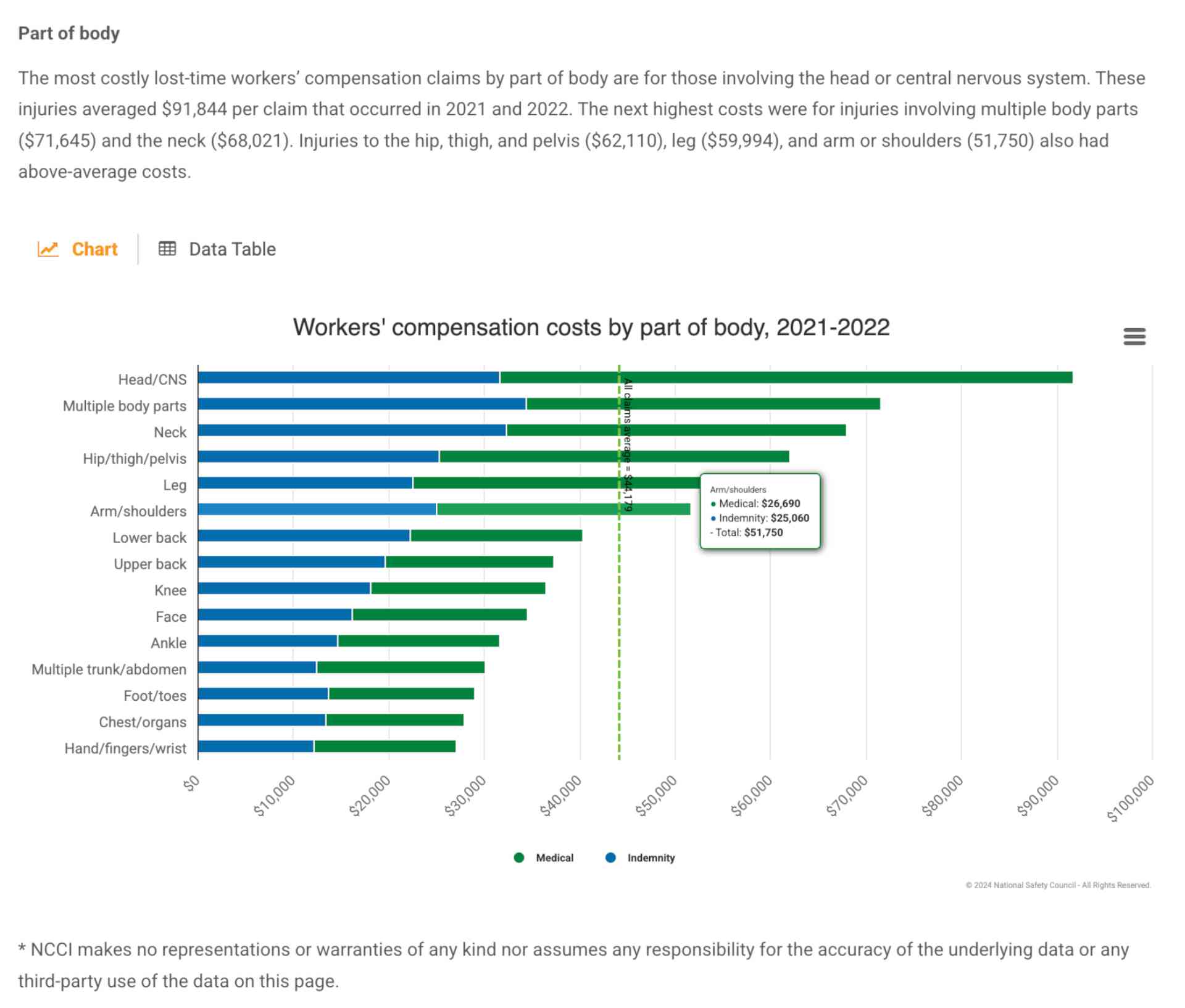
National figures show insurers split payments roughly 50/50 between medical bills and lost-wage indemnity, with an average of $26,690 in medical expenses and $25,060 in time-loss payments.
L&I Time-loss Compensation
L&I pays about 60% to 75% of your gross wages, depending on your marital status and number of dependents. Time loss is paid every two weeks. If you’re still off work and your doctor keeps certifying your restrictions, the checks should continue. These payments are tax-free and continue until you:
- Return to work,
- Reach maximum medical improvement (MMI)
- The claim closes.
Medical Coverage
L&I pays your doctors, surgeons, and therapists directly for claim-related conditions while your claim is open. You won’t see that money, but you won’t be billed. If you need follow-up care, injections, pain management, or multiple surgeries, you have the right to request them. If treatment is denied or delayed, that’s when you call a lawyer.
Vocational Rehabilitation and Retraining Benefits
If your job is no longer an option due to the severity of the injury, L&I may assign you a vocational counselor. This can lead to a plan (Option 1) or a buyout (Option 2), both of which can be a benefit.
PPD Award At Claim Closure
If you reach MMI and are rated for permanent loss, you’ll receive a Permanent Partial Disability (PPD) payment. This amount is based on your rating and the state schedule for arm loss (see section above).
How Long Does It All Last?
Workers’ comp payments last as long as you qualify for them. That could mean:
- A few weeks, if you heal quickly.
- A few years, if your injury is severe.
- For life, if you qualify for a permanent disability pension.
If you lose total use of your arm and can’t return to any gainful employment, you may be entitled to lifetime pension payments with cost-of-living increases each year.
How and When To Get Legal Help
You don’t need a lawyer for every claim. But if your specific injury requires surgery, it’s wise to speak with a professional. In these circumstances, your case likely has permanent value, and the system is not designed to help you maximize it on your own. Here’s when to get legal help and why it matters:
- The claim is being closed, but you haven’t recovered. L&I can shut a claim as soon as their IME doctors say that you have reached MMI, even if you’re still in pain, restricted from working, and unable to do your job. Once your claim is closed, your benefits stop unless you take action to challenge the closure.
- The doctor’s impairment rating seems too low. If your range of motion is limited, your strength hasn’t come back, or you have nerve symptoms, your rating should reflect that. IME doctors often underreport these impairments, which lowers your settlement. You can challenge the rating or get a second opinion.
- L&I won’t approve the treatment your doctor recommended. Delayed surgery approvals, denied physical therapy, or canceled referrals stall your recovery. A lawyer can push the claim forward, request hearings, or facilitate medical reviews when care is delayed or denied.
- Vocational services are offered, but don’t lead anywhere. If your counselor doesn’t offer retraining or claims you can return to work that clearly isn’t safe, that plan can, and should, be challenged.
- Time-loss checks stop without warning. If you’re still under a doctor’s care but the checks stop, something is wrong. A missing form, a bad IME, or an internal decision may be at fault, but you shouldn’t have to fight alone to restart your income.
- A self-insured employer is controlling the process. Boeing, Amazon, Starbucks, and other large employers manage their own claims. That means they pick the doctor, control your file, and often pressure injured workers to return to work too soon or settle cheaply. You need someone on your side who knows how to push back.
- You’re overwhelmed, out of work, and don’t know what to do next. The claims process is designed to confuse you. If you’re stuck-physically, financially, or emotionally, a lawyer can walk through your entire case, explain your options, and help you decide what’s best.
Get a Fair Settlement By Working With a Washington Workers’ Comp Attorney
If you’ve had elbow surgery, your claim has lasting value. Whether you’re facing a low impairment rating, a surprise claim closure, or pressure to return to work too soon, a lawyer can step in and help. We know how L&I and self-insured employers handle these claims because we deal with them every day.
Our Law Firm represents injured workers across Washington. We challenge bad ratings, negotiate stronger settlements, push for second opinions, and reopen claims. If something doesn’t feel right, let us take a look. There’s no charge to talk to us.
FAQs – Average Workers’ Comp Settlement For Elbow Surgery
Will surgery increase my workers’ comp settlement?
Surgery often increases the final award, but only if it results in permanent impairment. If your elbow doesn’t fully recover or if your motion and strength remain limited, your impairment rating will reflect that.
Will I pay tax on my workers’ compensation settlement?
No. Time-loss compensation and PPD awards in Washington are not taxable.
What if I can’t return to work after my arm injury?
If your doctor says you can’t go back to your old job, you may qualify for vocational retraining, loss of earning power benefits, or a pension if no work is reasonably available. These benefits can significantly increase the value of your claim.
Can I reopen my claim if my condition worsens?
Yes. If your condition worsens after the claim is closed, you can apply to reopen. You’ll need medical proof that your elbow injury has gotten objectively worse since the closure date.
What if my employer is self-insured?
Most workers’ compensation claims are handled by the Department of Labor & Industries. Large companies can be self-insured and manage their own claims under L&I supervision. The benefits are the same on paper, but self-insured employers control the doctor choice, the claim file, and, too often, claim closure. Expect tougher negotiations.