


A wrist injury can change how you work and live. If you can’t grip, lift, type, or use your hand the way you used to, your career and income are on the line. In Washington, the amount of your wrist injury settlement depends on how your injury is rated, how well your limitations are documented, and whether you fight back when the L&I tries to settle cheaply.
Since wrist injuries are among the most common workplace injuries, understanding how workers’ comp benefits are calculated is critical. Otherwise, you risk walking away with less than you deserve.
What Common Wrist Injuries Qualify for Workers’ Compensation?
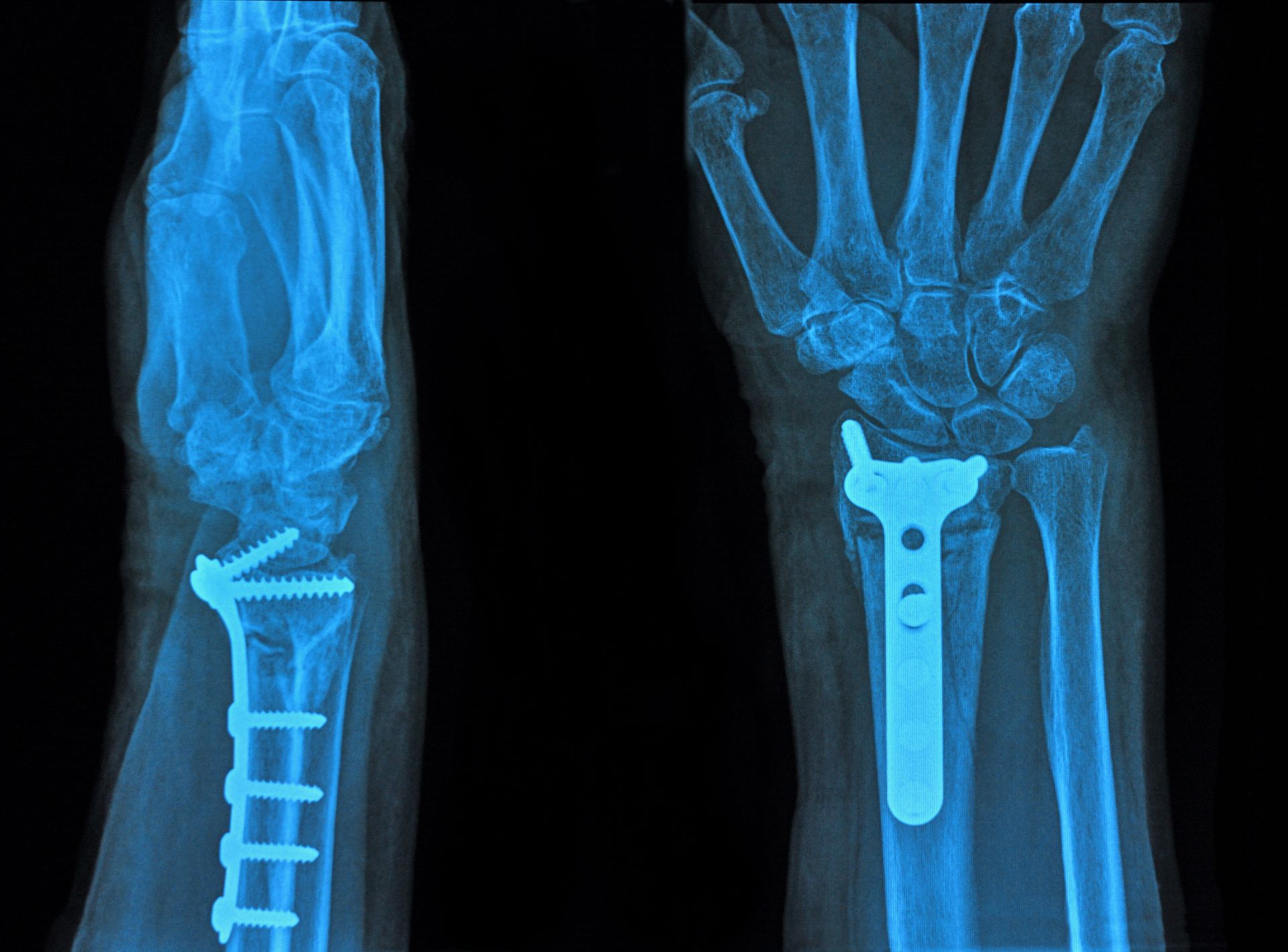
If you injured your wrist on the job or if years of repetitive motion like typing, lifting, or twisting made an existing condition worse, you likely have a valid hand or wrist injury claim in Washington. These injuries are common in construction, manufacturing, healthcare, warehouse, delivery, and office jobs, where both heavy lifting and repetitive strain are daily demands. Whether your injury came from a sudden traumatic event or developed slowly over time, the law covers it if there’s a clear connection to your work, medical imaging, and support from qualified providers.
Here are the most common hand and wrist injuries and surgical procedures seen in workers’ compensation claims:
| Category | Injury or Procedure | Description |
|---|---|---|
| Fractures | Distal radius fractures (includes Colles and Smith fractures) | Breaks in the radius bone near the wrist, often due to falling on an outstretched hand. |
| Scaphoid or carpal bone fractures | Breaks in the small wrist bones that may require screws, pins, or bone grafts. | |
| Ligament & tendon injuries | Triangular fibrocartilage complex (TFCC) tears | Damage to cartilage and ligaments that stabilize the wrist, usually caused by twisting injuries. |
| Wrist sprains and ligament tears | Tearing or overstretching of wrist ligaments, often leading to instability and long-term weakness. | |
| Tendonitis or tenosynovitis | Inflammation of tendons from overuse, lifting, or repetitive motion. | |
| De Quervain’s tenosynovitis | Painful inflammation of tendons along the thumb side of the wrist, common in gripping and lifting jobs. | |
| Nerve conditions | Carpal tunnel syndrome | Compression of the median nerve from repetitive hand or wrist use, sometimes requiring release surgery. |
| Ulnar or radial nerve entrapment | Nerve compression injuries causing numbness, tingling, or weakness in the wrist and hand. | |
| Degenerative conditions | Post-traumatic arthritis | Degenerative joint damage that develops after fractures or ligament injuries. |
| Ulnar impaction syndrome | Condition where the ulna bone presses against the wrist, causing cartilage wear and chronic pain. | |
| Kienböck’s disease | Avascular necrosis of the lunate bone from loss of blood supply, sometimes linked to repetitive trauma. | |
| Other wrist conditions | Ganglion cyst excision | Removal of cysts that form after repetitive strain or trauma and interfere with wrist use. |
| Surgeries | Arthroscopic debridement or repair | Minimally invasive surgery to clean out damaged cartilage or tissue. |
| Open reduction internal fixation (ORIF) | Surgical use of plates, screws, or pins to stabilize wrist fractures. | |
| Wrist fusion (arthrodesis) | Fusion of wrist bones to relieve pain and restore stability, but with permanent loss of motion. | |
| Total wrist replacement (arthroplasty) | Replacement of the wrist joint with an implant, typically due to severe arthritis or trauma. | |
| Hardware removal surgery | Removal of plates, pins, or screws that cause pain or restrict movement after prior surgery. | |
| Revision wrist surgery | Corrective surgery after a failed repair, fusion, or replacement. |
What Is the Average Workers’ Comp Settlement for Wrist Injury?
According to the National Safety Council, the average settlement for a wrist injury in workers’ comp cases is between $26,000 and $30,000. That figure includes everything from a sprained wrist to major injuries like fractures, carpal tunnel syndrome, or surgeries such as fusions and replacements. These averages are also tied to average wages, since lost earnings make up a large portion of most personal injury claims.
In Washington, your settlement isn’t based on a national average. It’s calculated using a workers’ compensation settlement rating, which measures how much function you’ve permanently lost. The higher your impairment rating, the higher your award. The settlement for a wrist injury that limits grip strength, motion, or affects your dominant hand can easily exceed national averages if it’s fully documented and appropriately rated under Washington’s permanent partial disability (PPD) system.
Put simply, while the U.S. average might hover around $26,000 to $30,000, a properly rated and documented wrist impairment in Washington can result in a compensation amount above that. The exact payout depends on how your injury is assessed and whether permanent limitations are fully reflected in your PPD rating.
How Wrist Injuries Are Rated in Washington’s PPD System
In Washington, most wrist injuries are rated using the scheduled loss system. The law assigns a maximum dollar value to each body part, and your workers’ comp award is calculated as a percentage of that maximum value. The maximum only applies if you lose the entire use of the arm, as if it had been amputated. If you can still bend, grip, or use your hand in any way, your impairment is rated as a percentage of the maximum.
Here’s what the 2025 Labor and Industries (L&I) Permanent Partial Disability Award Schedule says an arm is worth for injuries between July 1, 2024, and June 30, 2025:
| Impairment Location | Maximum Award |
|---|---|
| Arm at or above the deltoid insertion or by disarticulation of the shoulder | $158,599.41 |
| Arm at any point below the deltoid insertion to below the elbow joint at the insertion of the biceps tendon | $150,669.36 |
| Arm at any point from below the elbow joint, distal to the insertion of the biceps tendon, to and including mid-metacarpal amputation of the hand | $142,739.49 |
The information in these charts and the dollar figures listed are provided to help readers evaluate their claims. There is no guarantee that your claim will produce the same results. Past outcomes do not ensure future success. Each case is unique and will be evaluated independently. Your outcome will depend on various factors, including the facts, the law, timeliness, advocacy, and unforeseen circumstances.
The information on this website is provided to help interested persons understand the role that legal services play in the claim process. This data is intended solely for informational purposes and does not constitute legal advice. It is not a replacement for consultation with a qualified attorney about your specific legal situation. Click here for a free consultation with an attorney.
Your actual award depends on what percentage of impairment you are left with. For example:
- A warehouse worker with a distal radius fracture that leaves them with limited wrist motion and grip strength, requiring medical treatment, like physical therapy, to restore function, might be rated at 20% loss below the elbow: 20% x $142,739.49 = $28,547.90.
- An office worker who develops severe carpal tunnel and undergoes release surgery but still struggles with pain and weakness could be rated at 15% loss below the elbow: 15% x $142,739.49 = $21,410.
- A construction worker who undergoes a total wrist fusion, leaving them unable to bend the wrist and with reduced grip, might be rated at 30% loss below the elbow: 30% x $142,739.49 = $42,821. In cases like this, future medical needs commonly contribute to claim reopenings, especially if the fusion puts stress on surrounding joints.
But these numbers only matter if the rating reflects the real limitations you live with. That includes loss of grip strength, instability, range-of-motion deficits, and the need for braces or assistive devices. If the doctor downplays or misses these issues, your award will be lower than it should be.
How Dominant Hand vs. Non-Dominant Hand Injuries Affect Settlement Values
An injury to your dominant hand usually has a much greater impact on your ability to work and earn a living than one to your non-dominant hand. Losing grip strength, fine motor control, or wrist motion in the hand you rely on every day can mean you’re no longer able to perform basic tasks at work or at home.
The state’s PPD schedule doesn’t ever pay more for dominant hand injuries, but the vocational impact is often much greater. An injury to your dominant hand can influence your access to retraining, loss of earning power (LEP) benefits.
For example, a right-handed carpenter who loses 20% of function in their right wrist may face far more serious career limits than if the same injury happened to their left wrist. Here’s how the same injury can play out in very different ways:
| Scenario | Impairment Rating | PPD Calculation | Likely Vocational Impact | Estimated Total Claim Value |
|---|---|---|---|---|
| Right-handed carpenter injures dominant wrist | 20% loss below the elbow | 20% x $142,739.49 = $28,548 | Unable to return to carpentry, qualifies for retraining and LEP benefits | $60,000+ once vocational benefits are added |
| Right-handed carpenter injures non-dominant wrist | 20% loss below the elbow | 20% x $142,739.49 = $28,548 | Can still perform many job duties, reduced need for retraining | $28,000 – $35,000 depending on restrictions |
The information in these charts and the dollar figures listed are provided to help readers evaluate their claims. There is no guarantee that your claim will produce the same results. Past outcomes do not ensure future success. Each case is unique and will be evaluated independently. Your outcome will depend on various factors, including the facts, the law, timeliness, advocacy, and unforeseen circumstances.
The information on this website is provided to help interested persons understand the role that legal services play in the claim process. This data is intended solely for informational purposes and does not constitute legal advice. It is not a replacement for consultation with a qualified attorney about your specific legal situation. Click here for a free consultation with an attorney.
Long-Term Risks and Secondary Problems of Wrist Injuries

A wrist injury doesn’t always end with the first surgery or impairment rating. Many workers face complications that develop months or years after the settlement, which can increase the true cost of the injury and may justify reopening their workers’ comp claim in Washington. The most common long-term risks include:
- Post-traumatic arthritis: Cartilage and ligament damage often leads to chronic pain, stiffness, and loss of motion that worsen over time.
- Overuse of the opposite wrist: Relying on the uninjured hand can cause carpal tunnel, tendonitis, or other repetitive stress problems.
- Complications from fusion surgery: A fused wrist removes motion and shifts stress onto other joints, creating new problems.
- Complications from wrist replacement: Artificial joints may loosen, wear out, or require revision surgery.
- Secondary restrictions: New limitations that weren’t obvious at first, such as difficulty gripping or using tools, can appear after maximum medical improvement.
- Chronic nerve problems: Carpal tunnel, ulnar nerve entrapment, or neuropathy that persists or worsens after surgery.
- Complex regional pain syndrome (CRPS): A rare but severe condition that causes burning pain, swelling, and stiffness far beyond the original injury site.
- Loss of fine motor skills: Permanent difficulty with small, precise movements needed for typing, buttoning, or using tools.
- Progressive weakness or instability: Muscle loss or instability around the wrist and forearm that worsens over time.
Reopening a Claim for Long-Term Wrist Problems
If problems develop after your claim is closed, you may still have options. In Washington, you can reopen a claim if medical evidence shows your condition has worsened since the original settlement. To give yourself the best chance of success:
- Get detailed medical documentation. Your doctor must clearly describe new or worsening symptoms and link them to your original injury.
- Include objective findings. Imaging (X-rays, MRIs), nerve studies, or surgical notes carry more weight than symptoms alone, especially when documenting a permanent injury.
- Act quickly when symptoms change. Don’t wait months or years after noticing new issues; file as soon as there’s evidence of worsening.
- Keep records of work limitations. Document any new restrictions or job duties you can’t perform due to your wrist, particularly in cases of a partially disabling wrist injury.
- Consult an attorney early. A workers’ compensation attorney can coordinate with your doctor, ensure your application is complete, and challenge any pushback from L&I or a self-insured employer.
Reopening isn’t automatic. It requires strong proof. But if arthritis, nerve damage, or new restrictions appear, taking these steps can get you compensated for problems that didn’t show up until after your initial settlement.
When to Call a Seattle Workers’ Compensation Lawyer
Not every wrist injury claim needs a lawyer, but many do. L&I and self-insured employers are quick to minimize ratings, push for early settlements, and deny benefits you may be entitled to. If you’re dealing with any of the following situations, it’s time to seek legal advice.
- You receive a low impairment rating. A lawyer can challenge the rating, get an independent medical opinion, and make sure loss of motion, grip strength, and fine motor skills are properly measured. This can also be critical in a personal injury case where damages extend beyond workers’ comp.
- An Independent Medical Examiner (IME) downplays your condition. Attorneys can dispute IME reports, present your doctor’s evidence, and keep your award from being cut down unfairly.
- Your injury is to your dominant hand. A lawyer can connect the dots between your medical impairment and vocational impact, securing retraining or LEP benefits..
- You face permanent job restrictions. Attorneys help prove you can’t safely return to your old work and push for vocational retraining or higher settlements, especially when future lost wages are at stake.
- You need to reopen a claim. A lawyer knows what medical documentation L&I requires and can work with your providers to strengthen your reopening application.
- The insurer or employer disputes your claim. Legal representation ensures deadlines are met, appeals are filed properly, and you don’t get pushed out of the system.
- You’re an independent contractor or misclassified worker. An attorney can challenge unfair misclassification so you qualify for coverage and benefits.
- You’ve had multiple surgeries or ongoing pain. Lawyers can argue for higher awards based on compounding impairment, especially if surgical intervention or revision surgery is likely.
In short, a lawyer levels the playing field. While L&I focuses on closing claims for less, an experienced attorney makes sure your award reflects the real damage to your wrist, your ability to work, and your long-term stability.
Get a Fair Settlement by Working With a Washington Workers’ Comp Attorney
A wrist injury can leave you with permanent loss of strength, reduced mobility, and long-term limits on what kind of work you can do. That makes your claim valuable, but the value isn’t automatic. L&I and self-insured employers will push to close your case as cheaply as possible, often before the full impact of your injury is known.
At our Law Firm, we fight for Washington workers to make sure your compensation reflects the reality of your injury. We challenge low impairment ratings, secure second medical opinions, and reopen claims when long-term complications such as arthritis or nerve damage arise. We also push for retraining and LEP benefits when you can’t return to your old job. In serious cases where the plaintiff suffered injuries such as a crush injury or significant tissue damage, we work to ensure those long-term effects are fully valued in your claim.
You don’t pay us unless we increase your benefits. If you’re unsure whether a settlement offer is fair, or if your doctor’s rating truly reflects what you’ve lost, get in touch with us. A free consultation can give you the answers you need before making decisions that affect your future, including how much compensation you may be entitled to in financial recovery.