

Hand injuries are among the most common workplace accidents and can have lasting consequences for workers who rely on strength, coordination, and dexterity to do their jobs. Crush injuries, fractures, tendon damage, nerve injuries, and amputations can permanently change your career. Because Washington Labor and Industries (L&I) often pushes claims toward closure quickly, workers sometimes accept settlements before the full impact of a hand injury is understood. Understanding how Washington’s workers’ compensation system values hand injuries can help injured workers recognize whether a claim is being handled fairly before agreeing to a settlement.
What Hand Injuries Qualify for Workers’ Compensation?
Hand injuries can happen from machinery accidents, falling objects, tool incidents, or repetitive work that places constant stress on the hands. Many workplace hand conditions develop as gradual repetitive-motion injuries, where repeated gripping, lifting, or tool use places ongoing strain on muscles, tendons, and nerves. Other hand injuries happen suddenly during acute workplace accidents, such as crush incidents, falls, or machinery malfunctions that cause immediate trauma. Even injuries that initially seem minor can lead to lasting problems with grip strength, coordination, or sensation.
Washington law allows workers to file a workers’ compensation claim if a hand injury occurred at work or if job duties worsened a prior condition. When properly documented, they form the basis for workers’ compensation. The following injuries may qualify for workers’ compensation if there is a medical connection to your job:
| Injury or Condition | How It Happens and What It Looks Like |
|---|---|
| Hand fractures | Falls, crush incidents, or heavy impacts can break bones in the hand or wrist, often requiring immobilization or surgery. |
| Carpal bone fractures (such as scaphoid fractures) | Falls onto an outstretched hand or direct trauma can fracture small wrist bones, sometimes leading to long recovery periods or surgery. |
| Crush injuries | When machinery, equipment, or heavy materials compress the hand, the injury may involve fractures, nerve damage, and soft tissue damage combined. |
| Joint dislocations | Sudden force from falls, machinery accidents, or impacts can force finger or hand joints out of position, causing severe pain and instability. |
| Ligament injuries | Twisting forces or heavy impacts can tear ligaments that stabilize joints in the hand, sometimes leaving lasting weakness or instability. |
| Tendon injuries | Deep cuts or sudden force can damage the tendons that control finger and hand movement, leading to loss of motion or grip strength. |
| Nerve injuries | Trauma to nerves in the hand can cause numbness, tingling, burning pain, or loss of sensation and coordination. Some nerve compression conditions, such as carpal tunnel syndrome, may also develop gradually with repetitive work activities. |
| Severe lacerations | Deep cuts from tools, glass, or machinery can damage muscles, tendons, nerves, and blood vessels in the hand. |
| Amputations | Machinery accidents, cutting tools, or crushing forces can result in partial or complete loss of fingers or parts of the hand. |
| Multiple finger injuries | Accidents involving machinery or heavy equipment may injure several fingers at once, reducing overall hand function. |
| Loss of motion or permanent stiffness | Fractures, tendon injuries, or joint damage may heal with lasting stiffness that limits range of motion and grip strength. |
| Post-traumatic arthritis | Damage to joints from fractures or dislocations can lead to arthritis over time, causing chronic pain and reduced mobility. |
| Compartment syndrome | Severe crush injuries can cause dangerous pressure buildup in the hand that requires emergency surgery. |
| Infections or surgical complications | Deep wounds or surgery may lead to infections or complications that prolong recovery and worsen functional loss. |
| Repetitive stress injuries | Repeated gripping, lifting, or tool use can cause conditions such as tendonitis or nerve compression that gradually limit hand function, sometimes described medically as repetitive trauma injuries. |
What Is the Average Workers’ Compensation Settlement for a Hand Injury in Washington?
National data can provide a starting point for understanding how much hand injury claims are worth. According to data from the National Safety Council (NSC) analyzing workers’ compensation claim total costs between 2022 and 2023, the average total cost of a hand, finger, or wrist claim is $28,326. That figure includes $15,120 in medical expenses and $13,206 in indemnity payments, which represent wage replacement and disability benefits paid during the claim.
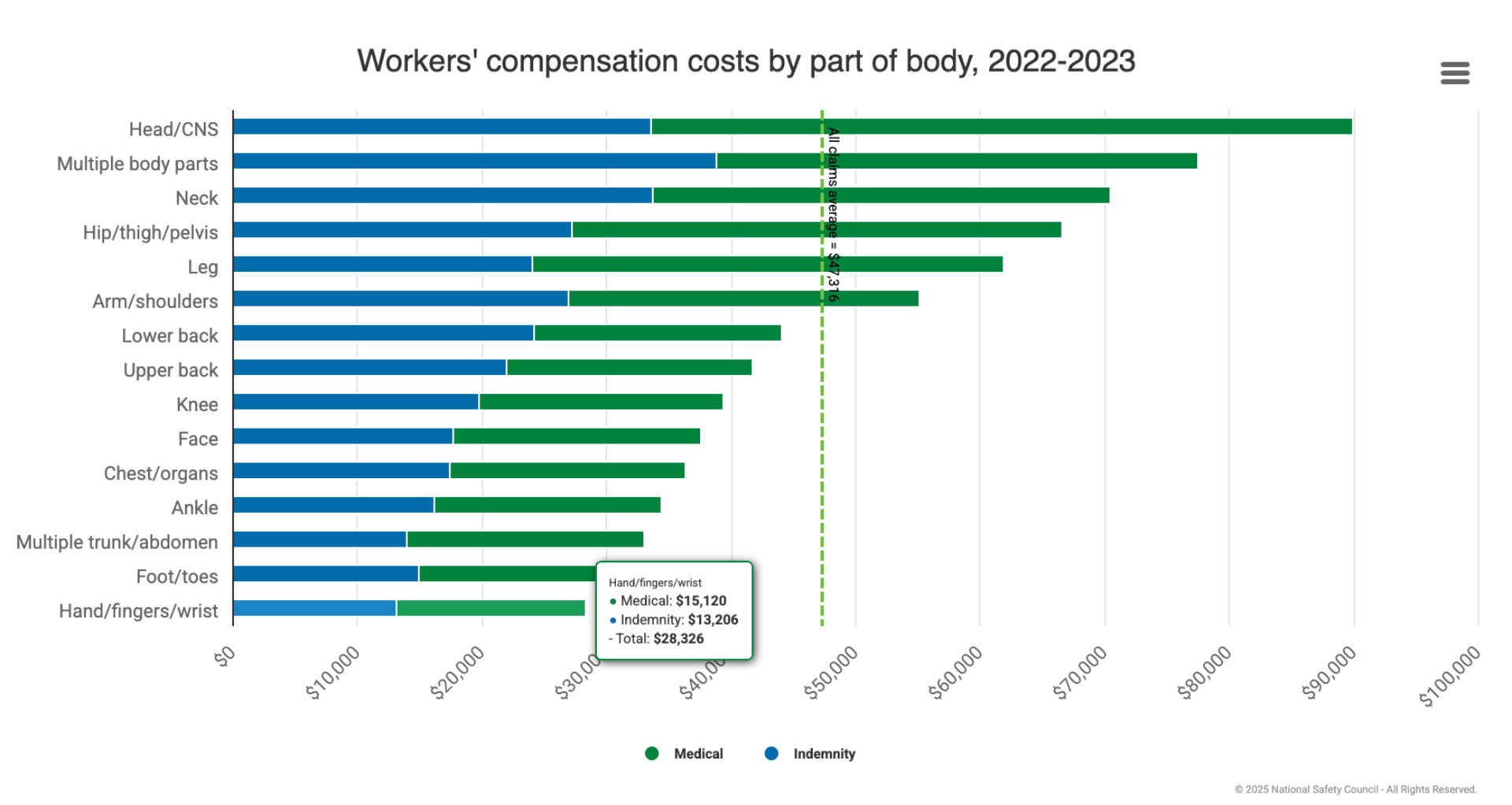
These figures represent the average cost of claims, not average settlement value. Settlements occur only after medical treatment stabilizes and permanent impairment has been evaluated.
Claims are resolved through medical treatment, wage replacement benefits, and permanent partial disability (PPD) awards issued when a claim closes.
Averages are only so useful for your situation because of the wide range of injuries included in this category. Minor sprains or fractures may resolve with little lasting impairment, while severe crush injuries or amputations can lead to permanent disability and significantly higher compensation.
The Difference Between PPD Awards and CRSA Settlements
Washington workers’ compensation claims end with a CRSA settlement or with a permanent partial disability (PPD) award based on a statutory schedule as part of the workers’ compensation claims process.
Understanding the distinction is important because these outcomes work very differently in Washington’s workers’ compensation system.
- A permanent partial disability (PPD) award is the most common outcome. After medical treatment ends and you reach maximum medical improvement (MMI), L&I determines whether your injury caused permanent impairment and issues a payment based on the statutory impairment schedule.
- PPD awards are set by law, not negotiated. The payment amount is determined by the impairment rating assigned to the injured body part and the values listed in the state’s disability schedule, and they are paid as permanent disability benefits when a work injury results in lasting impairment.
- Claim Resolution Settlement Agreements (CRSAs). These agreements allow eligible workers to resolve portions of a workers’ compensation case for a negotiated amount instead of continuing to receive future wage or disability benefits, even though the claim may still involve future medical treatment related to the injury.
- CRSAs are limited and must be approved. These agreements go through the workers’ compensation system, are not available in every claim, and they typically eliminate L&I’s responsibility for future medical costs associated with the accepted condition.
- Most hand injury claims close through the PPD rating process. Because of this, understanding how L&I values permanent hand impairments plays a major role in determining what your claim may ultimately be worth.
How Washington Workers’ Comp Values Hand Injuries
Washington’s workers’ compensation system values permanent injuries using the relevant permanent partial disability (PPD) schedule. This schedule assigns a maximum dollar value to the complete loss of specific body parts. Lesser injuries are then valued as a percentage of that maximum amount depending on the level of permanent impairment.
For injuries involving the hand, the schedule sets a value for amputation of the hand at the mid-metacarpal level. For 2026, the maximum PPD award for the complete loss of a hand is $142,739.49.
| Impairment Location | Maximum Award |
|---|---|
| Arm at or above the deltoid insertion or by disarticulation of the shoulder | $158,599.41 |
| Arm at any point below the deltoid insertion to below the elbow joint at the insertion of the biceps tendon | $150,669.36 |
| Arm at any point from below the elbow joint, distal to the insertion of the biceps tendon, to and including mid-metacarpal amputation of the hand | $142,739.49 |
The information in these charts and the dollar figures listed are provided to help readers evaluate their claims. There is no guarantee that your claim will produce the same results. Past outcomes do not ensure future success. Each case is unique and will be evaluated independently. Your outcome will depend on various factors, including the facts, the law, timeliness, advocacy, and unforeseen circumstances.
The information on this website is provided to help interested persons understand the role that legal services play in the claim process. This data is intended solely for informational purposes and does not constitute legal advice. It is not a replacement for consultation with a qualified attorney about your specific legal situation. Click here for a free consultation with an attorney.
Most hand injuries do not involve complete loss of the hand. Instead, permanent loss of grip strength, motion, nerve function, or combined finger impairment is rated as a percentage of the total hand value listed in the schedule, which is then used to calculate how much compensation you will receive.
This percentage-based system is why the potential settlement range can be so wide. Minor impairments may produce relatively small awards, while severe injuries that significantly reduce hand function can approach the full scheduled value. For example:
- Mild loss of hand function: A worker suffers a fracture that heals but leaves a small permanent limitation in range of motion. The injury results in a 5% impairment rating to the hand (5% x $142,739.49), producing an award of about $7,136.97.
- Moderate functional loss: A worker experiences tendon damage that permanently reduces grip strength and fine motor control even after occupational therapy. The injury is rated at 15% of the hand (15% x $142,739.49), resulting in an award of approximately $21,410.92.
- Significant nerve damage: A worker suffers nerve trauma that causes ongoing numbness, weakness, and loss of coordination. They underwent surgery and significant physical therapy, yet the injury still resulted in a 30% impairment rating (30% x $142,739.49), with an award of about $42,821.85.
- Severe crush injury affecting multiple fingers: A machinery accident damages several fingers and permanently reduces overall hand strength and coordination. The injury results in a 50% impairment of the hand (50% x $142,739.49), producing an award of approximately $71,369.75.
- Total loss of the hand: A worker suffers a traumatic amputation at the mid-metacarpal level. Because this represents a 100% impairment of the hand, the worker receives the maximum compensation of $142,739.49.
How L&I Evaluates Hand, Wrist, and Finger Injuries
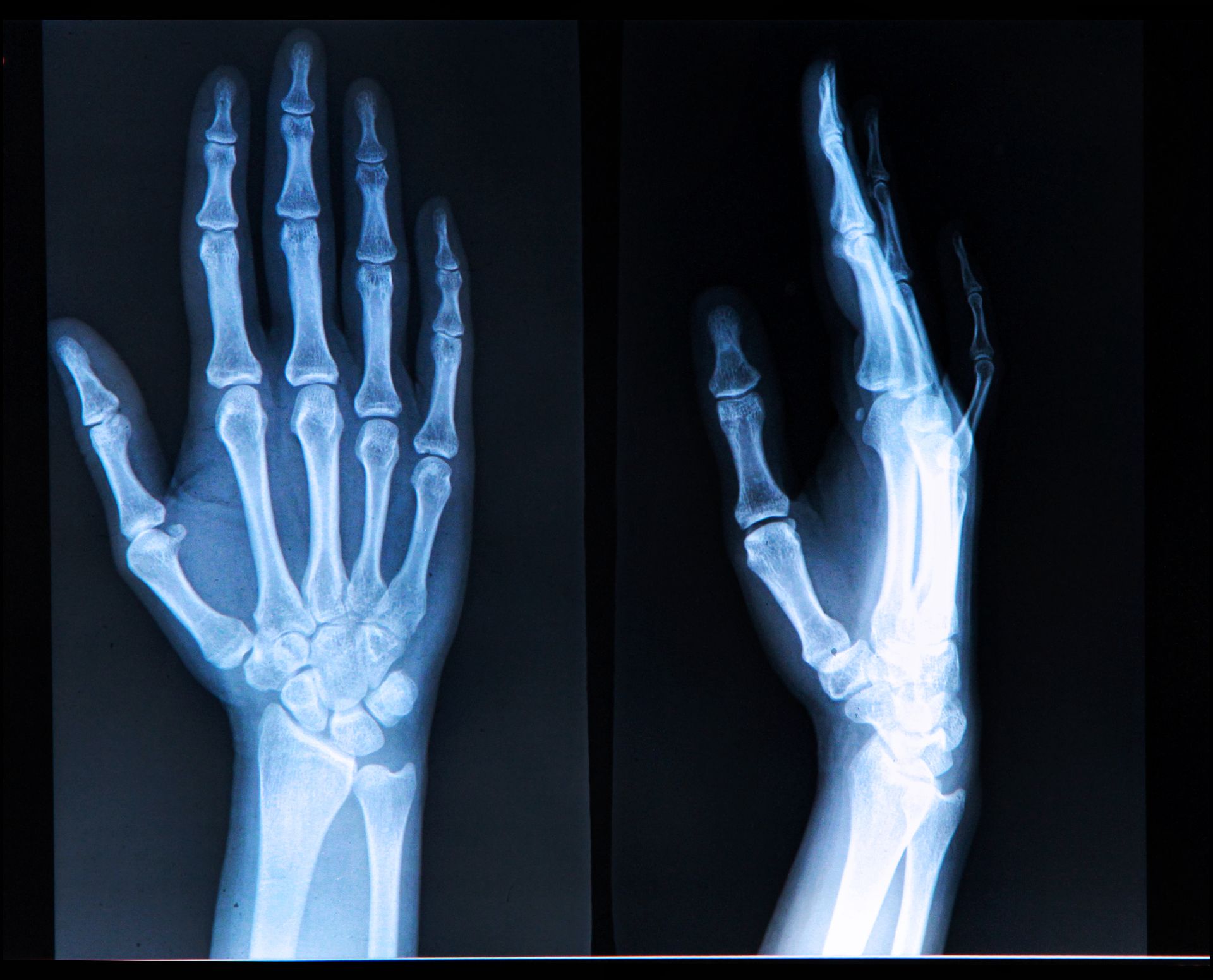
Hand injuries often involve more than one part of the upper extremity. A workplace accident may affect the fingers, the hand, the wrist, or several of these structures at the same time. In Washington workers’ compensation claims, the key issue is not just which body part was injured, but how much permanent function was lost.
- Finger injuries are rated under the finger schedule. L&I assigns specific values to individual and multiple finger injuries depending on the joint where the loss occurs. Even when a finger is not amputated, permanent stiffness, loss of motion, or nerve damage may still be rated as a percentage of that finger’s scheduled value.
- Hand and wrist injuries are usually evaluated together. The schedule does not assign a separate value to a hand or wrist injury. Instead, they fall within the same upper-extremity category of the schedule. Doctors typically evaluate how the injury affects overall hand function, including grip strength, range of motion, sensation, and coordination.
- Combined injuries are common. Many workplace accidents damage multiple body parts at once. A machinery accident may cause multiple finger fractures while also damaging tendons in the hand, or a fall may fracture the wrist and reduce grip strength. When this happens, the impairment rating often reflects the combined loss of hand function rather than separate ratings for each structure.
- How the injury is evaluated can affect the value of the claim. A finger injury rated under the finger schedule produces a different award than the same loss of function evaluated as a hand impairment. Because of this, the medical evaluation and impairment rating process play a major role in determining what a hand injury claim may ultimately be worth.
Do You Need a Seattle Workers’ Comp Lawyer for a Hand Injury?
Many hand injury claims move through the workers’ compensation system without major disputes, especially when the injury heals, and no permanent impairment remains. Problems tend to arise when a hand injury leaves lasting loss of function, and the claim is pushed toward closure before the full extent of that impairment is recognized. You should strongly consider speaking with an experienced workers’ compensation attorney if any of the following situations apply:
- Your hand injury caused permanent loss of grip strength, coordination, or range of motion. A lawyer can help ensure the impairment is properly documented and reflected in the final disability rating.
- You have ongoing numbness, weakness, or nerve damage that was minimized during an independent medical exam (IME). A lawyer can challenge the IME findings and push for a more accurate evaluation.
- L&I assigned an impairment rating that does not reflect the findings of your treating doctor. A lawyer can work to correct the rating before your workers’ compensation case closes.
- Your claim is being closed even though your condition has not fully stabilized. A lawyer can help prevent premature closure until your medical condition is properly evaluated.
- L&I or your employer is questioning whether the injury is work-related. A lawyer can help gather the medical evidence needed to support the claim.
- Your injury required surgery or may require surgery in the future. A lawyer can help ensure the long-term effects of the injury are fully considered before the claim is resolved.
- Your injury affects multiple fingers or significantly reduces the overall function of your hand. A lawyer can help ensure the impairment rating reflects the combined loss of function.
- Your doctor has placed permanent work restrictions that affect your ability to perform your job. A lawyer can help address how those restrictions affect the value and direction of the claim.
- Your injury involves multiple structures in the hand, such as bones, tendons, and nerves. A lawyer can help ensure the full extent of the injury is properly evaluated before the claim closes.
Hand injuries are often more complex than they appear at first. When the value of a claim depends heavily on impairment ratings and medical documentation, small differences in how an injury is evaluated can lead to large differences in the outcome.
How We Help With Hand Injury Workers’ Comp Claims
Hand injury claims often come down to details that are easy to miss and difficult to correct once a claim closes. Our role is to make sure those details are identified, documented, and properly evaluated before L&I issues a final impairment rating or closes the claim.
We review medical records to identify overlooked loss of motion, grip strength, or nerve function that may affect the impairment rating. When necessary, we challenge ratings that do not reflect the actual loss of hand function and respond to independent medical exams that minimize the extent of your workplace injury. Our goal is to make sure the medical evidence accurately reflects how the injury affects the worker’s ability to use their hand.
If you suffered a hand injury at work and are unsure whether your claim is being handled fairly, our law firm offers free consultations and claim reviews. We can help you understand where your claim stands, whether the impairment rating appears accurate, and what options may be available before the claim closes.
FAQs – Hand Injury Workers’ Comp Claims
Can you receive time-loss benefits for a hand injury?
Yes. If a hand injury prevents you from working for more than three days, you may qualify for time-loss benefits. These payments replace a portion of your lost wages while you recover and are unable to work or while your doctor places restrictions that prevent you from performing your job.
How long does a hand injury workers’ comp claim take to resolve?
Some claims resolve within a few months if the injury heals quickly and no permanent impairment remains. More serious injuries involving surgery, nerve damage, or lasting functional loss may take much longer because the claim usually stays open until the worker reaches maximum medical improvement.
Can a hand injury claim be reopened if the condition worsens?
In some cases, yes. If the condition objectively worsens after a claim closes, a worker may be able to reopen the claim for additional medical treatment or benefits. Reopening requires medical evidence showing that the accepted condition has deteriorated since the claim was closed. Reopening within seven years of the first final closure can be for full benefits. After seven years, reopening benefits are usually limited to medical only.
What if a hand injury prevents you from returning to your job?
If permanent limitations prevent you from returning to your previous job, L&I may evaluate whether modified work or vocational services are appropriate. In more serious cases where the worker cannot realistically return to gainful employment, the claim may qualify for long-term benefits such as a workers’ compensation pension.
Does surgery increase the value of a hand injury claim?
Not necessarily. Surgery itself does not determine the value of a claim. What matters is the level of permanent impairment that remains after treatment is complete. Some workers recover well after surgery with minimal lasting limitations, while others may experience ongoing stiffness, nerve damage, or loss of strength that results in a higher impairment rating.