


An ankle injury can affect nearly every part of your work and daily life. If you can’t walk, climb, lift, or stand the way you used to, your ability to earn a living may be at risk. Recovery can take months, and many injured workers deal with ongoing pain, weakness, or limited mobility even after surgery.
The value of a settlement depends on the type of injury, whether surgery was required, and how the affected ankle limits your ability to work in the future. L&I often tries to close these claims quickly and for less than they’re worth, which is why understanding the value of these settlements is so important before agreeing to close your case.
What Common Ankle Injuries Qualify for Workers’ Compensation?
If you injured your ankle on the job, or if repetitive strain or heavy demands at work made an existing condition worse, you likely have a valid workers’ compensation claim in Washington.
These work-related ankle injuries are common in construction, manufacturing, healthcare, warehouse, delivery, and retail jobs, where falls, heavy lifting, and long hours on your feet are common. Whether your injury came from a sudden accident or developed over time, the law covers it if there’s a clear connection to your work.
Here are the most common ankle injuries and surgical procedures seen in workers’ compensation claims:
| Category | Injury or Procedure | Description |
|---|---|---|
| Fractures | Ankle fractures (tibia, fibula, talus) | Breaks caused by falls, twists, or crush injuries often require plates, screws, or pins. |
| Trimalleolar fractures | Severe breaks involving three parts of the ankle joint usually require open surgery. | |
| Pilon fractures | Breaks at the bottom of the tibia where it meets the ankle, often from high-impact accidents. | |
| Ligament & tendon injuries | Severe ankle sprains and ligament tears | Tearing or overstretching of stabilizing ligaments, leading to chronic instability. |
| Achilles tendon rupture | Complete or partial tear of the Achilles tendon, sometimes requiring surgical repair. | |
| Posterior tibial tendon dysfunction | Damage or degeneration of the tendon supporting the arch, leading to flatfoot deformity and pain. | |
| Cartilage & joint injuries | Osteochondral lesions | Damage to cartilage and underlying bone within the ankle joint, often from trauma. |
| Post-traumatic arthritis | Degenerative joint damage that develops after fractures or severe sprains. | |
| Surgeries | Open reduction internal fixation (ORIF) | Plates, screws, or pins are used to stabilize ankle fractures. |
| Ligament reconstruction | Surgery to restore stability after severe ligament damage. | |
| Ankle arthroscopy | Minimally invasive surgery to clean cartilage, remove loose fragments, or repair tissue. | |
| Ankle fusion (arthrodesis) | Fusion of ankle bones to reduce pain, with permanent loss of motion. | |
| Total ankle replacement (arthroplasty) | Replacement of the ankle joint with an implant, usually for severe arthritis or trauma. | |
| Hardware removal surgery | Removal of plates, screws, or pins that cause pain or restrict motion. | |
| Revision ankle surgery | Corrective surgery after a failed repair, fusion, or replacement. |
High-Risk Ankle Injuries That Often Require Surgery

Some ankle injuries are far more severe than others and almost always require surgical treatment. These high-risk injuries not only lead to longer recovery times but also tend to result in higher ankle injury settlement amounts because of the permanent limitations they cause.
- Breaks involving three parts of the ankle joint that nearly always require ORIF with plates and screws. Even after surgery, stiffness, arthritis, or chronic pain are common.
- Complex breaks at the bottom of the tibia, where it meets the ankle joint, are usually caused by high-impact accidents, such as falls from heights or heavy equipment crashes. These often require multiple surgeries and leave lasting mobility restrictions.
- Complete tears of the Achilles tendon that make walking impossible without surgery. Recovery takes months, and many workers are left with weakness, stiffness, or difficulty climbing, running, or performing heavy labor.
- Breaks involving two ankle bones, typically the tibia and fibula, almost always require surgery. They carry the risk of long-term instability and arthritis.
- Fracture-dislocations usually require urgent surgery and have a high complication rate, including nerve or blood vessel damage.
- Chronic ankle instability that requires reconstruction and severe ligament damage that does not heal with conservative care and requires surgical stabilization.
- Talar neck fractures are rare but serious breaks that often lead to avascular necrosis (loss of blood supply to the talus), resulting in chronic pain and permanent disability.
These injuries typically involve extensive medical treatment costs, longer recovery times, and a greater risk of permanent limitations. As a result, these claims often can settle for amounts well above those in other ankle injury cases.
What Is the Average Workers’ Comp Settlement for Ankle Injuries?
Workers’ compensation settlements for different ankle injuries vary widely, depending on injury severity, medical treatment, and lasting impairment. According to the National Safety Council (NSC), the average compensation for an ankle injury across all cases is about $31,685. Mild cases, such as a sprained ankle, may resolve with minimal benefits, while a broken ankle injury, torn ligaments, or surgical cases lead to much higher payouts.
When surgery is involved, settlement amounts typically exceed the average. National data shows that average workers’ comp claims with surgery top out at around $85,000, with a median near $45,000. Ankle injuries might look something like this:
| Injury Severity | Settlement Range |
|---|---|
| Mild to moderate injuries (without surgery) | $1,000 – $60,000 |
| Surgical cases (major fractures, ligament repairs, fusions, replacements) | $60,000 – $85,000 on average |
| Severe or complicated cases (permanent disability, multiple surgeries, amputation, chronic pain) | $100,000 or more |
The information in these charts and the dollar figures listed are provided to help readers evaluate their claims. There is no guarantee that your claim will produce the same results. Past outcomes do not ensure future success. Each case is unique and will be evaluated independently. Your outcome will depend on various factors, including the facts, the law, timeliness, advocacy, and unforeseen circumstances.
The information on this website is provided to help interested persons understand the role that legal services play in the claim process. This data is intended solely for informational purposes and does not constitute legal advice. It is not a replacement for consultation with a qualified attorney about your specific legal situation. Click here for a free consultation with an attorney.
The type of surgery also influences a claim’s settlement value. Procedures involving plates, screws, pins, or ligament reconstruction generally result in higher settlements due to long-term mobility issues.
In Washington, your settlement is not determined by a national average, but by your permanent partial disability (PPD) rating, which measures how much function you’ve permanently lost. That means the same ankle surgery could result in very different settlement amounts depending on your impairment rating, documentation, and whether your restrictions affect your ability to return to work.
How Ankle Injuries Are Rated in Washington’s PPD System
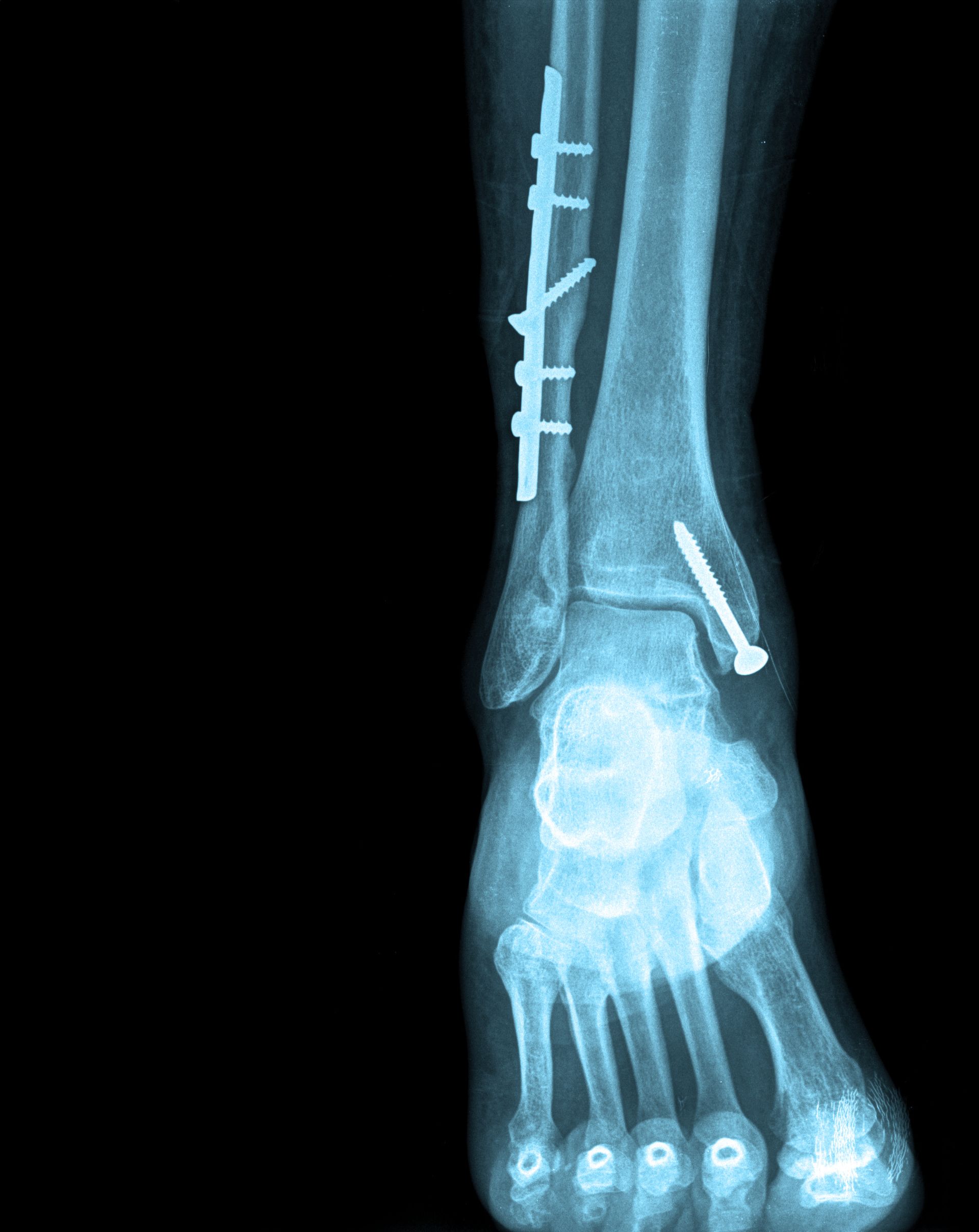
In Washington, foot and ankle injuries are compensated under the workers’ compensation benefits schedule called Permanent Partial Disability. The state assigns a maximum dollar value to each body part if it were lost entirely to amputation. Injuries are then rated as a percentage of that maximum, based on how much function you’ve permanently lost. The table below shows the L&I 2025 award values for leg injuries, including the ankle:
| Leg | Maximum Award |
|---|---|
| Leg above the knee joint with short thigh stump (3″ or less below the tuberosity of the ischium) | $158,599.41 |
| Leg at or above the knee joint with a functional stump | $142,739.49 |
| Leg below the knee joint | $126,879.72 |
| Leg at ankle (Syme) | $111,019.68 |
The information in these charts and the dollar figures listed are provided to help readers evaluate their claims. There is no guarantee that your claim will produce the same results. Past outcomes do not ensure future success. Each case is unique and will be evaluated independently. Your outcome will depend on various factors, including the facts, the law, timeliness, advocacy, and unforeseen circumstances.
The information on this website is provided to help interested persons understand the role that legal services play in the claim process. This data is intended solely for informational purposes and does not constitute legal advice. It is not a replacement for consultation with a qualified attorney about your specific legal situation. Click here for a free consultation with an attorney.
The $111,019.68 figure represents the maximum possible award for the complete loss of a leg at the ankle joint. You would only receive that amount if you suffered ankle amputation. Most injuries are rated as a percentage of that maximum value, depending on how much function you lost. Here are a few examples:
- A warehouse worker with a severe sprain that leaves some stiffness but no lasting instability might be rated at 5% of the ankle value: 5% x $111,019.68 = $5,551.
- A construction worker who undergoes ORIF with plates and screws and is left with limited motion could be rated at 20% of the ankle value: 20% x $111,019.68 = $22,204.
- A worker who suffers a catastrophic crush injury and loses the ankle completely would be entitled to the full award of $111,019.68.
This system means that surgeries and severe complications usually result in much higher awards than sprains or partial tears, but still less than a total amputation. Workers with significant permanent disability often receive far more than those with lesser injuries.
When to Call a Seattle Workers’ Compensation Lawyer
Not every ankle injury claim requires an attorney, but many workers lose out on benefits because they accept low ratings and early settlements. Insurance companies often downplay how serious ankle injuries can be, especially after surgery, and may push you to close your claim before long-term complications become apparent.
Hiring a workers’ compensation attorney can make the difference between a quick payout and a truly fair settlement. You should strongly consider speaking with a lawyer if:
- You receive a low impairment rating: A doctor working for L&I may give you a percentage that doesn’t reflect your real loss of motion, stability, or strength.
- L&I pushes for an early settlement: Closing too soon will prevent you from getting adequate medical care.
- An Independent Medical Examiner (IME) disputes your doctor’s opinion: A lawyer can challenge IME findings and present stronger medical evidence.
- You face permanent job restrictions: If you can’t stand for long periods, climb, or return to heavy labor, an attorney can push for retraining benefits or loss of earning power benefits if you can only return to lighter work.
- You’ve had multiple surgeries or ongoing complications: The more procedures and lingering symptoms you have, the more likely it is that the insurer will undervalue your claim.
- You’re misclassified as an independent contractor: Many workers are denied coverage until a lawyer proves they were actually employees under the law.
- Vocational retraining disputes: If L&I or a self-insured employer refuses retraining even though your restrictions prevent you from returning to your job, a lawyer can appeal the decision, challenge the vocational determination, and fight for either retraining benefits or Loss of Earning Power (LEP) benefits to make sure you’re compensated fairly.
- Denied wage replacement benefits: When the insurance carrier disputes whether your ankle injury really keeps you from working.
- Refusal to cover secondary conditions: If knee, hip, or back problems from altered gait are denied as related to your claim.
- Surveillance or fraud accusations: If investigators or social media monitoring are used against you.
- Settlement offers tied to resignation: Some employers pressure workers to resign in exchange for settlement money, which should never be agreed to without legal advice.
- Permanent partial disability rating disputes: If doctors give different impairment percentages, and the insurer chooses the lower one.
- Medical treatment denials: When needed care, such as therapy, injections, or revision surgery, is refused.
A workers’ compensation lawyer levels the playing field. While insurers are motivated to save money, an attorney makes sure your award reflects the true extent of your injury and the impact it has on your future.
Protect Your Future After an Ankle Injury
An ankle injury that requires surgery isn’t just a short-term setback. It can change how you move, limit the kind of work you can do, and create long-term health problems. Insurance companies often try to settle these claims for the lowest possible amount, leaving you to deal with the consequences on your own. For many injured workers, understanding their ankle injury settlement amounts and the true average payout is critical before agreeing to close a claim.
You don’t have to face that alone. At our law firm, we focus on making sure ankle injury compensation reflects surgeries, recovery time, future medical expenses, and the risk of secondary problems. Whether your claim involves a more severe injury, such as a fusion or even the loss of your right ankle, we fight to make sure every detail is valued fairly.
If you’re worried about your settlement or want to know what your claim is truly worth, contact us today. A free consultation can give you clarity and the confidence to push back for the benefits you deserve, including coverage for pain and suffering in related personal injury cases where applicable.
FAQs – Average Workers’ Comp Settlement for Ankle Injury With Surgery
How long does it take to settle an ankle injury workers’ comp claim?
The timeline depends on the severity of the injury and how quickly you reach maximum medical improvement (MMI). Minor ankle sprains may settle in a few months, while surgical cases often take a year or more. Claims involving complications or additional surgeries can take several years before they are ready for settlement.
Does it matter if I injured my dominant leg?
Yes. While Washington’s PPD schedule doesn’t pay more for dominant vs. non-dominant legs, the vocational impact is often much greater. If you injured the leg you rely on most for climbing, lifting, or balance, you may qualify for retraining or loss of earning power (LEP) benefits in addition to your PPD award.
Can I get additional compensation if my ankle injury causes knee, hip, or back problems later?
Yes. Secondary conditions caused by altered gait are compensable if medical evidence shows they are linked to your original ankle injury. If arthritis, chronic pain, or instability develops in other joints later, you may be able to reopen your claim and receive additional benefits.
Do ankle fusions or replacements qualify for higher workers’ comp settlements?
Generally, yes. An ankle fusion eliminates joint motion, whereas a replacement involves an implant that may wear out or require revision surgery. Both outcomes usually lead to higher impairment ratings and settlements than sprains or simple fractures.
What happens if my ankle surgery fails or I need additional surgeries?
Failed surgeries, hardware removal, or revision procedures usually increase claim value because they extend recovery time and add to permanent impairment. If your condition worsens after your claim is closed, you may also qualify to reopen it.
Will workers’ comp cover braces, orthotics, or mobility aids for my ankle?
Yes. Workers’ comp is supposed to cover necessary medical devices, including ankle braces, custom orthotics, canes, or scooters, if your doctor prescribes them. Ongoing use of assistive devices should also be factored into your impairment rating.
Are settlements higher for ankle amputations compared to reconstructions?
Yes. Amputations are rated at the maximum value for the ankle under Washington’s schedule. Reconstructions typically result in a percentage of the impairment rating above.
Can I reopen my claim if arthritis develops years after my ankle injury?
Yes. Washington law allows claims to be reopened if objective medical evidence shows your condition has worsened since the last claim closure. Post-traumatic arthritis is a common reason ankle claims are reopened.
What if L&I says my ankle injury was a pre-existing condition?
Insurers often argue that ankle injuries are “pre-existing” or “degenerative.” However, if your job duties aggravated the condition or caused it to worsen, it can still qualify for workers’ comp. Medical documentation connecting your condition to your work is critical.
Do I need a lawyer if my ankle injury seems minor?
Even seemingly minor ankle injuries can develop into long-term problems. If you’ve had surgery, ongoing instability, or job restrictions, a lawyer can help make sure your settlement reflects the full impact of your injury. At a minimum, a free consultation can give you clarity on whether your case is being undervalued. What’s not to like about free?