


A hip injury can take away the ability to perform the basic movements required for most jobs. Even after the bone heals, many workers are left with stiffness, weakness, or lasting limits that affect how they live and earn a living. If the injury isn’t properly documented or rated by the Department of Labor and Industries (L&I), the claim will be undervalued. Every hip injury has value, and it’s important to understand what affects that value and how to fight for the compensation you deserve.
What Hip Injuries Qualify for Workers’ Compensation?
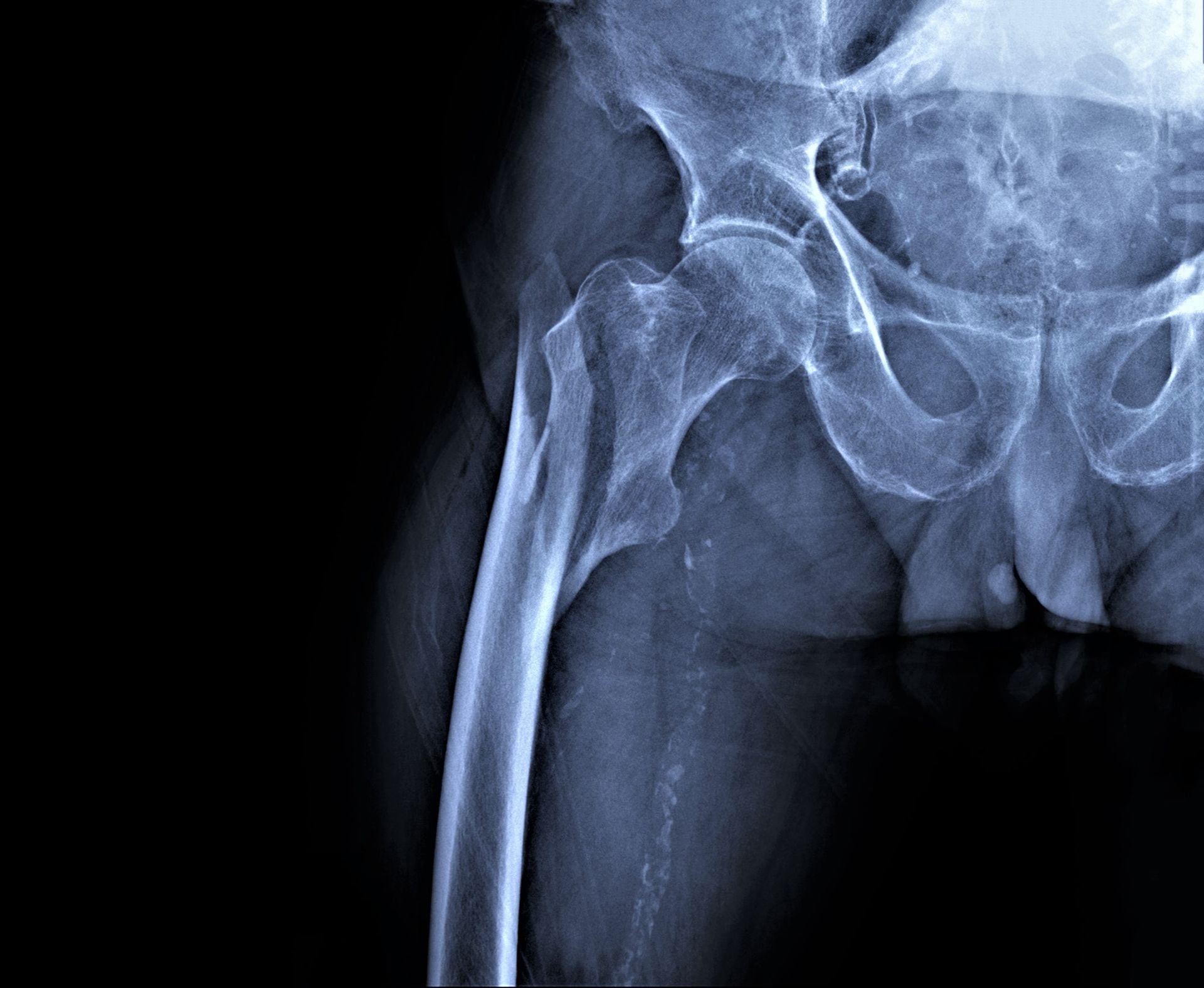
A hip injury can happen from a fall, heavy lifting, repetitive motion, or sudden impact at work. Even injuries that start small can lead to surgery and lasting mobility limits.
Washington law allows you to file a workers’ comp claim if your hip injury happened at work, or if your job duties made a prior condition worse. These injuries aren’t always immediately apparent, but when properly documented, they have value and form the basis for hip injury compensation. Here are the most common hip injury cases we see in workers’ compensation claims:
| Injury or Condition | How It Happens or Presents |
|---|---|
| Hip fracture | Workers with a fractured hip caused by a fall, crush incident, or heavy impact often require surgical fixation or replacement. |
| Hip dislocation | When a hip joint is forced out of its socket by sudden force from falls, machinery accidents, or vehicle crashes, it causes severe pain and immobility. |
| Labral tear | Hip labral tears occur when the cartilage around the hip socket is damaged by twisting, pivoting, or impact, often resulting in sharp pain and a catching sensation in the joint. |
| Cartilage damage (chondral injury) | Direct trauma can break down cartilage inside the joint, which may occur along with a fracture or dislocation and lead to lasting stiffness or pain. |
| Tendon or muscle tear (hip flexor, hamstring, gluteal) | Sudden overexertion, heavy lifting, or a slip can tear the muscles or tendons around the hip, leading to loss of strength and restricted mobility. |
| Nerve injury (sciatic, femoral) | Trauma or a surgical complication can damage nerves near the hip, resulting in numbness, tingling, or weakness in the leg. |
| Crush injuries | When heavy machinery or falling objects compress the hip region, the result may include fractures, nerve injuries, and soft tissue damage combined. |
| Penetrating trauma | Construction or industrial accidents involving sharp objects or machinery can cause penetrating trauma to the hip, carrying a high risk of vascular and nerve complications. |
Any of these may qualify for workers’ compensation if there’s a medical link to your job. What matters is how the injury limits your ability to work or function, and whether the impairment is permanent.
Average Workers’ Comp Settlement Amounts for Hip Injuries
There isn’t a single average settlement number that fits every hip injury claim. Settlements depend on the severity of the injury, whether surgery is needed, and the extent of permanent functional loss. But looking at national averages can give you a starting point. The National Safety Council and other sources report average costs for hip, thigh, and pelvis injuries at about $62,110. These numbers include both wage replacement and medical expenses, but settlements can range widely:
| Injury type | Typical settlement range (U.S.) |
|---|---|
| Minor soft tissue injury (no surgery) | $5,000 – $20,000 |
| Moderate injury requiring surgery | $20,000 – $40,000 |
| Severe fracture or hip replacement | $50,000 and up |
The information in these charts and the dollar figures listed are provided to help readers evaluate their claims. There is no guarantee that your claim will produce the same results. Past outcomes do not ensure future success. Each case is unique and will be evaluated independently. Your outcome will depend on various factors, including the facts, the law, timeliness, advocacy, and unforeseen circumstances.
The information on this website is provided to help interested persons understand the role that legal services play in the claim process. This data is intended solely for informational purposes and does not constitute legal advice. It is not a replacement for consultation with a qualified attorney about your specific legal situation. Click here for a free consultation with an attorney.
How Hip Injuries Are Rated in Washington’s Permanent Partial Disability System
Washington doesn’t calculate hip injury settlements the way most states do. Instead of negotiation alone, L&I uses a permanent partial disability (PPD) award schedule that assigns fixed dollar values to different body parts, their functions, and specific impairments, categorized as a percentage of “total body impairment” (TBI). For July 1, 2025, through June 30, 2026, 100% TBI is valued at $264,332.13.
Your hip injury payout depends on which category applies and how your doctor documents the impairment.
The Most Common in Hip Injury Ratings
Most hip injuries are rated under the pelvis section of the PPD schedule. These values apply when the hip joint or surrounding structures, including the hip socket, are damaged but the leg itself has not been surgically removed or rendered nonfunctional. For pelvis injuries, the schedule sets out the following categories, each corresponding to a percentage of TBI.
| Category | % of Total Body Impairment | Award |
|---|---|---|
| 2 | 2% | $5,286.63 |
| 3 | 5% | $13,216.62 |
| 4 | 5% | $13,216.62 |
| 5 | 5% | $13,216.62 |
| 6 | 5% | $13,216.62 |
| 7 | 10% | $26,433.21 |
| 8 | 10% | $26,433.21 |
| 9 | 15% | $39,649.83 |
The information in these charts and the dollar figures listed are provided to help readers evaluate their claims. There is no guarantee that your claim will produce the same results. Past outcomes do not ensure future success. Each case is unique and will be evaluated independently. Your outcome will depend on various factors, including the facts, the law, timeliness, advocacy, and unforeseen circumstances.
The information on this website is provided to help interested persons understand the role that legal services play in the claim process. This data is intended solely for informational purposes and does not constitute legal advice. It is not a replacement for consultation with a qualified attorney about your specific legal situation. Click here for a free consultation with an attorney.
A doctor’s role is to evaluate your hip injury and assign the correct category under Washington’s PPD schedule. Examples include:
- A worker who suffers a labral tear requiring arthroscopic surgery but regains near-full motion might fall in Category 3 (5%, $13,216.62).
- A displaced hip fracture that heals with screws or a plate but leaves stiffness and pain could fall in Category 5 or 6, also valued at about $13,216.62.
- A worker who needs a total hip replacement after a traumatic fracture, with permanent limits on mobility, may be rated at Category 7 or 8 (10%, $26,433.21).
- In the most serious cases, such as multiple fractures of the pelvis with long-term instability, an award in Category 9 (15%, $39,649.83) may apply.
The PPD system is designed to standardize awards, but it makes documentation critical. If your doctor underestimates your impairment or omits details, L&I will pay only the lower category by default.
Leg Ratings Can Apply in Severe Hip Injury Cases
In some cases, a hip injury is so severe that it is rated under the leg section of Washington’s PPD schedule rather than the pelvis section. This usually happens when the injury causes a permanent loss of leg function—a level of impairment comparable to amputation—meaning the worker can no longer bear weight, walk independently, or use the leg effectively, even with medical support. These cases can occur when a hip replacement fails, when the hip and upper leg must be surgically removed after emergency surgery, or when extensive nerve or vascular damage leaves the leg nonfunctional.
While the pelvis section covers joint injuries and instability, the leg section assigns awards based on the loss of the leg at different levels, with higher amounts tied to more extensive loss or complete amputation. The current schedule sets awards as follows. Your percentage PPD rating will be multiplied by the award amount below.
| Condition | Award |
|---|---|
| Leg above the knee joint with short thigh stump (≤3″ below ischium) | $158,599.41 |
| Leg at or above the knee joint with functional stump | $142,739.49 |
| Leg below knee joint | $126,879.72 |
| Leg at ankle (Syme amputation) | $111,019.68 |
The information in these charts and the dollar figures listed are provided to help readers evaluate their claims. There is no guarantee that your claim will produce the same results. Past outcomes do not ensure future success. Each case is unique and will be evaluated independently. Your outcome will depend on various factors, including the facts, the law, timeliness, advocacy, and unforeseen circumstances.
The information on this website is provided to help interested persons understand the role that legal services play in the claim process. This data is intended solely for informational purposes and does not constitute legal advice. It is not a replacement for consultation with a qualified attorney about your specific legal situation. Click here for a free consultation with an attorney.
These numbers show how the leg schedule represents the extreme end of hip-related injuries. While pelvis awards range from just over $5,000 to about $39,000, leg awards allow for higher settlements. For example:
- A worker who suffers a traumatic hip fracture that cannot be repaired and requires surgical removal of the upper leg may receive the full above-the-knee award of $158,599.41.
- A failed hip replacement with severe complications that leaves the leg nonfunctional might be rated 100% in the leg at or above the knee category, worth $142,739.49.
- A case where a hip injury leads to permanent vascular or nerve damage that forces below-the-knee amputation would result in a percentage of the $126,879.72 award.
- In rare situations in which hip trauma necessitates ankle-level removal, the worker may qualify for the $111,019.68 award.
Impairment Ratings Can Be Combined in More Complex Cases
Hip injuries often qualify for more than one type of permanent partial disability (PPD) award. Washington’s system allows these impairments to be combined. This can turn a small award into a much larger final settlement when all impairments are documented.
| Injury | Description | Pelvis Rating | Leg Rating | Combined Award |
|---|---|---|---|---|
| Pelvis + leg shortening | A warehouse worker suffers a hip fracture and receives a Category 5 pelvis rating. The same injury leaves them with a ¾-inch leg length difference, which qualifies for a 10% award under the leg schedule. | $13,216.62 | $26,433.21 | $39,649.83 |
| Hip replacement + loss of range of motion | A factory worker undergoes a total hip replacement and is rated at Category 7 pelvis ($26,433.21). Medical exams show they have lost 25% of their hip flexion and abduction, qualifying them for an additional $13,216.62. | $39,649.83 | – | $39,649.83 |
| Pelvis instability + nerve-related leg loss | A construction worker suffers multiple fractures of the pelvis, leading to chronic instability, earning a Category 9 pelvis rating. They also develop nerve damage that reduces the functional use of their leg below the knee. | $39,649.83 | $126,879.72 | $166,529.55 |
| Catastrophic injury with multiple ratings | A logging accident crushes a worker’s hip and pelvis. They undergoe a hip replacement, are left with a leg length discrepancy, and suffer from permanent weakness requiring a cane. | $26,433.21 | $153,312.93 | $179,746.14 |
The information in these charts and the dollar figures listed are provided to help readers evaluate their claims. There is no guarantee that your claim will produce the same results. Past outcomes do not ensure future success. Each case is unique and will be evaluated independently. Your outcome will depend on various factors, including the facts, the law, timeliness, advocacy, and unforeseen circumstances.
The information on this website is provided to help interested persons understand the role that legal services play in the claim process. This data is intended solely for informational purposes and does not constitute legal advice. It is not a replacement for consultation with a qualified attorney about your specific legal situation. Click here for a free consultation with an attorney.
Potential Long-Term Consequences of Hip Injuries and the Right To Reopen Your Claim

A hip injury doesn’t always end once the bone heals or surgery is complete. Many workers develop complications that last for years and change how they move, work, and live. Washington’s workers’ comp system allows these issues to be rated, but only if they or their potential are documented before the claim closes. Here are some of the most common long-term consequences of hip injuries:
| Consequence | How It Affects You and Your Claim |
|---|---|
| Leg shortening after a hip injury | Even a half-inch difference can alter your gait, leading to back or knee problems. Washington’s PPD schedule assigns ratings for leg length differences, which can be combined with pelvis awards. |
| Loss of range of motion in the hip joint | Doctors measure hip flexion, extension, abduction, and rotation. Even partial loss qualifies for a PPD rating, which can be combined with other impairments. |
| Arthritis and post-traumatic degeneration | Many workers develop arthritis years after the initial injury, leading to stiffness, pain, and, in some cases, the need for future surgeries. Claims may be reopened if the condition objectively worsens. |
| Walking and weight-bearing restrictions | Jobs that require standing, climbing, or carrying are especially affected. These restrictions reduce earning capacity and should be factored into settlements, but they aren’t. |
| Permanent use of assistive devices | Long-term use of a cane, crutch, or walker signals permanent functional loss that may qualify for additional ratings. |
| Nerve injuries | Hip trauma can damage nerves, causing weakness, tingling, or chronic pain in the leg. These deficits are compensable under Washington’s system. |
| Chronic pain | Ongoing pain after surgery or fracture repair can limit daily activities and work capacity, warranting higher ratings. |
| Gait changes | Abnormal walking patterns often develop after hip trauma, leading to strain on other joints like the knees and spine. This secondary impact strengthens the case for added compensation. |
| Revision surgeries | Some workers need multiple hip surgeries or replacements, each of which can support a new or higher impairment rating. |
| Partial leg loss tied to hip injury | In catastrophic cases, hip injuries may lead to amputation or loss of leg function, which shifts the award to the higher-value leg schedule. |
Workers usually receive their first award once the hip injury reaches maximum medical improvement and is rated under the PPD schedule. If new complications develop later, Washington law gives you the right to reopen your claim for aggravation of the condition. When a claim is reopened, new impairments can be rated and added to the total award.
The catch is that reopening has strict deadlines and requires medical proof that the condition has gotten worse since the original award. Without proper documentation, L&I will treat the first payout as final. That’s why it’s critical to track long-term changes and get legal help if your symptoms progress.
Hip Replacements in Workers’ Comp Claims
Hip replacements are one of the most common outcomes after a serious work-related hip injury. A fracture, dislocation, or joint collapse may leave no option other than surgical intervention to replace part or all of the joint. Under Washington’s system, these injuries are compensated through the pelvis schedule, with awards increasing based on severity.
| Condition | Typical Award |
|---|---|
| Partial hip replacement with good recovery | Typically falls under Category 6 pelvis ($13,216.62). |
| Total hip replacement | Commonly rated at Category 7 pelvis ($26,433.21). |
| Failed replacement requiring revision surgery | May qualify for Category 9 pelvis ($39,649.83), especially if permanent restrictions remain. |
The information in these charts and the dollar figures listed are provided to help readers evaluate their claims. There is no guarantee that your claim will produce the same results. Past outcomes do not ensure future success. Each case is unique and will be evaluated independently. Your outcome will depend on various factors, including the facts, the law, timeliness, advocacy, and unforeseen circumstances.
The information on this website is provided to help interested persons understand the role that legal services play in the claim process. This data is intended solely for informational purposes and does not constitute legal advice. It is not a replacement for consultation with a qualified attorney about your specific legal situation. Click here for a free consultation with an attorney.
In addition to these pelvic awards, hip replacements can trigger combined opportunities. If the surgery leaves one leg shorter, limits the range of motion, or creates nerve problems that persist even after surgery, those impairments can be rated separately and added to the total award.
Why You Need a Lawyer for a Hip Injury Claim
Hip injuries might look straightforward, but in Washington’s workers’ comp system, they are anything but. The value of your claim depends on how well your injury is documented, which categories are rated, and whether complications are understood and documented before your claim closes. That’s where the guidance of an experienced workers’ compensation lawyer becomes critical. You may need a lawyer if:
- Your hip injury involves multiple impairments. A replacement plus leg shortening or loss of range of motion can all be rated separately, but L&I won’t combine them unless someone pushes for it.
- Your award seems too low. A single pelvis rating might miss other compensable issues, such as gait changes, arthritis, or assistive device use.
- You’re pressured to settle early. Claims managers often try to close hip injury claims quickly, before long-term problems, like arthritis or revision surgeries develop.
- Your doctoror more likely an IME doctor under-rates your impairment. Not every provider understands how Washington’s PPD schedule works. A lawyer can get the right specialists to evaluate your hip.
- Your condition gets worse later. If you need another surgery or your hip deteriorates, a lawyer can help you reopen the claim and secure additional awards.
- Your employer disputes the claim. Some employers argue that hip degeneration is “age-related” instead of work-related, which can slash or deny benefits without proper advocacy.
- You get a low IME rating. Independent medical exams often minimize impairments. A lawyer can challenge a bad IME and request or set up another evaluation.
- Your hip injury affects your ability to work. If you can’t return to your old job, you may need vocational rehabilitation or long-term wage replacement, which insurers frequently fight.
- You face catastrophic outcomes. Amputations, failed hip replacements, or permanent loss of use almost always require legal advocacy to secure the six-figure awards the schedule allows.
For some workers, a hip injury also overlaps with a potential personal injury claim if negligence by a third party caused the accident. In those cases, your lawyer can coordinate both claims to ensure you maximize your recovery and don’t lose benefits because of overlapping insurance coverage issues.
Even a small difference in your rating can change your award by tens of thousands of dollars. An experienced lawyer makes sure your injury is fully rated, your rights are protected, and you don’t leave money on the table.
Get Help With Your Hip Injury Before You Lose Out
If you suffered a hip injury at work, don’t assume L&I or your employer will account for everything you’ve lost. Most workers receive only a fraction of what they’re entitled to because key impairments are under-rated, categories aren’t combined, or the claim is closed too early.
At our Law Firm, we focus on protecting every injury victim across Washington. We review claims for free, explain what your hip injury is really worth, and fight to secure every dollar you’re owed. You don’t pay us unless we win for you.
Don’t leave your future in the hands of L&I or an insurance company. Reach out today for a free consultation and get answers about your hip injury claim.
FAQs – Hip Injury Workers’ Comp Settlements
How long does it take to settle a workers’ comp claim for a hip injury?
Hip injury claims often take longer than average because treatment may involve surgery, recovery, and rehabilitation. It’s common for these claims to remain open a year or more, especially if future surgeries or ongoing medical treatment are necessary. Settling too soon can leave you underpaid if complications arise later.
Can I receive a PPD award if I can walk again after surgery?
Yes. Being able to walk doesn’t eliminate your right to compensation. Washington’s PPD schedule focuses on permanent loss of function, not whether you regain some mobility. Even if you return to walking without assistance, you may still qualify for awards based on range of motion loss or leg shortening.
What if my hip replacement wears out in the future?
Hip replacements don’t last forever, and many need revision within 10 to 20 years. If your original workplace injury caused the need for the replacement, and it wears out later, you may be able to reopen your claim to seek additional compensation for future medical care.
Do repetitive stress injuries to the hip qualify for workers’ comp?
Yes. While many hip claims come from sudden trauma like falls, repetitive stress from heavy lifting, climbing, or twisting can aggravate the hip joint and lead to labral tears, bursitis, or arthritis. If your condition worsens to the point that you can no longer work as before, your claim may also allow for future lost wages tied to permanent restrictions.
What happens if I can’t go back to my old job because of a fractured hip or similarly severe injury?
If your hip injury leaves you unable to return to physically demanding work, L&I may provide vocational retraining or wage replacement benefits. These programs are often disputed, and securing them can also help you manage related costs like medical bills that continue during recovery.
Does a hip injury increase the value of my time-loss benefits?
Not directly. Time-loss benefits are based on your wages before the injury. But because hip injuries often require longer recovery periods – and sometimes involve complications in severe cases – workers tend to receive more weeks or months of time-loss payments compared to less serious injuries.